You don’t know how much good you’re doing

‘You don’t know me,’ she began, ‘but my name’s Sandra and you changed my life!’

That’s not how most conversations began after I’d preached. I’d spoken to nearly 3000 at Spring Harvest, a very large Christian gathering, and afterwards several had taken their turn to thank me. I’d noticed a young lady standing off to one side, waiting until I was clear of the queue.

Sandra had stunned me with her opening sentence. ‘I need to hear how I could possibly have changed your life!’ I told her.

I listened to her story. In her late teens she’d sunk into a deep depression. Neither counselling nor medication had lifted her from a very dark place, and she’d become suicidal. Fearing for her life, doctors had committed her to a psychiatric hospital. Family and friends had visited, and her care was excellent, but nothing improved her mental health over the next two years.

Then a friend brought her a tape to listen to. ‘It was a tape of you preaching at a large gathering,’ she told me.

‘Really?’ I asked. ‘What was I talking about?’

‘You spoke about us being engraved on the palms of God’s hands, and you said that to God we are unforgettable.’

I remembered that address. I’d been asked to preach at the communion service of a national assembly, and had based my talk on verses from Isaiah chapter 49 which include these words from God: ‘See, I have engraved you on the palms of my hands’ (v. 16). I’d described running my hand over an engraved bowl, feeling how the words were cut right into the glass. Engraving was deep and permanent – it was unforgettable. And the image of us being engraved on God’s hands carried the message: we are unforgettable to him.

Sandra continued: ‘I believed my life was meaningless and insignificant. I didn’t matter – I was completely forgettable. I listened to what you said, played the tape again, and then again and again. And I began to believe what you said. God had not forgotten me.’

That was the turning point in her life. She took positive steps to improve her health and, with support from family, she was released from hospital. She found work, and she found faith. And that faith had brought her to Spring Harvest where I happened to be one of the main speakers.

Until then I hadn’t known there was anything special about that ‘engraved on the palms of God’s hands’ message. It had been appreciated by those present, but that was all. Except, it wasn’t all. Someone locked in a psychiatric ward got to hear it, and her life began to change.

It happened that I met Sandra and heard her story, but I might never have done.

I suspect that often we never get to know how much good our words and actions have done. It’s hard to know exactly how often that happens, because we can’t count what we don’t know!

I’ll describe some instances of significant things I might easily never have known about. I apologise that they’re all my stories, but, of course, how could others tell me stories of things they probably know nothing about?

Here are six instances when someone didn’t realise the significance of what they said or did.

One  As a young journalist I shared a room with two others at a residential conference. As we settled down to sleep, there was a short conversation about whether we believed in God. I said I did, to which John, one of my companions, responded: ‘I respect you believing in God, but what I can’t respect is that you don’t then do anything about it.’ (Described more fully in my earlier blog ‘Serious business’ 20.2.21) Those words hit me hard. He was right. It was nonsense that I believed God was real but didn’t do anything about it. John’s statement pushed me into a much deeper search for faith. John never knew his words had that effect.

Two  A few weeks after John’s tough words, I sat with other young adults asking questions about Christianity. All sorts of issues got raised. Should Christians be pacifists? Must a Christian marry only another Christian? Aren’t churches out of touch with society? Then Irene asked: ‘What do Christians mean when they say Christ died for them?’ It was Irene’s question, but also mine, except until that moment I hadn’t known it. What Christians meant when they said Christ died for them was exactly what I needed to understand. Just over 24 hours later, late into the night, I found the answer and gave my life to Christ. From that moment everything about my future changed. Later, Irene and I often talked about faith but she never knew how significant her question had been for me.

Three  In the run-up to Christmas, BMS World Mission sent hundreds of cards to supporters. I signed all of them personally because I wanted people to know how much we valued them. I never expected I’d get a reply. But I did. Every year a few would write: ‘I live alone, hardly see anyone, and yours is the only Christmas card I’ve received. I’m so grateful you thought of me.’ I’d never imagined our Christmas card would mean so much and nearly never knew it did.

Four  Probably all preachers know that some of their sermons die in mid air. The words never reach the congregation. The people show no signs of response. Twice – in two different churches – it was on the tip of my tongue to say: ‘I’m stopping now – this sermon is not helping – let’s just move to the closing hymn’. But I slogged on. The outcome was not what I expected. On both occasions, far more than usual thanked me for the sermon, and made it clear their words weren’t just politeness; they really were grateful. I could not escape the conclusion that message had done good. It had felt dreadful but only for the preacher, not for the congregation.

Five  Every sermon can’t be a ‘fireworks’ show, and my sermon didn’t feel bad, just ordinary. It was just a straightforward message about the Holy Spirit. I reached the end. Stopped. Normally people stir, but this time they were oddly quiet. Then Don stood. He’d been a Christian for only a year and was a quiet kind of man. He looked around at the others who were present, and said, ‘Alistair, on behalf of all of us, thank you for that message. It was so clear, so encouraging and so helpful’. People around him nodded their agreement. I wanted to say ‘Really?’ Instead I had the grace and good sense to thank him for his kind words. And when the service was over I went away once again amazed at how ignorant I’d been about the effect of my sermon.

These are all positive stories, but I must include one which is unfortunately negative.

Six  It was another major conference address, this one unhelpful for one person. (Included also in blog ‘Why quit while you’re ahead? 10.7.21) During my talk I described how one of my daughters nearly drowned when caught in a fast current. If someone hadn’t spotted her, she’d have been lost. Afterwards a lady came to me. She was angry and distraught. Why? Because her son had been murdered by drowning, and what I had described about my daughter had stirred her grief enormously. Part of me thought ‘I couldn’t have known that’ but I apologised profusely for upsetting her and promised to think more carefully about stories I included in my talks. She accepted my words, but was still distressed when she left.

Truly, we don’t know the effect of our words, or, if we do, only later.

I’ve reached these conclusions.

We are not the best judges of ourselves.    We may think we’re acting rightly, or speaking profoundly, but the real judge is the person on the receiving end. And their reaction may be very different to what we expect. Our words may be ordinary but hugely significant in the life of a person facing special circumstances. Or the finest oratory, or most generous of actions, may mean nothing to them because of problems they’re facing. Our skills and abilities are not what determine the responses of those around us. Often their responses are far better than our efforts deserve. We just don’t know what effect our words or actions will have.

We’re not in control of what’s significant for someone.    As I’ve greeted those leaving church after the service, I’ve been told, ‘Thank you, Alistair. That was such a special service for me.’ So I’ve asked what part of the sermon meant so much to them. ‘No, not the sermon,’ they’ve replied. ‘It was the phrase you used near the beginning that it’s good for us all to be together. That’s such an important thing and I’m glad you reminded me.’ I nod positively, but inside I’m thinking ‘I slaved for hours preparing my sermon, but what meant so much was an unscripted, unrehearsed phrase. Frustrating!’ It is frustrating, but actually rather wonderful. Someone was helped and encouraged; that’s the only thing that matters.

If you want to know how much you’re appreciated, leave.    That’s been my not-too-serious advice to pastors and other leaders. Farewell gatherings are full of speeches expressing gratitude for the many wonderful things done by the departing colleague, and how much they meant as a friend and fellow-worker. Mostly those statements are true, but they’d never have known if they hadn’t been leaving.

We need reasonable caution about what we say.    I learned that from the lady I upset with one story in my address. It was an innocent mistake, but in the future I did my best to imagine how listeners might react to illustrations used in my talks. We can’t shy away from recounting real life experiences, but can take sensible steps to minimise any upset.

If someone doesn’t know what they should know, tell them.    At some funerals, an opportunity is given to share a good memory about the deceased person. I’ve listened as story after story was told of the good effect that person had on people’s lives, and wondered, ‘Did they ever know this?’ Probably they didn’t. When my dad was in his mid-70s I wrote him a letter thanking him for being a great father to me. From my youngest I’d known he loved me, supported me, believed in me, and taken delight in my achievements. I was privileged. So I wrote down what all that had meant for me, and thanked him from the bottom of my heart, then sealed the letter and posted it. Several days later I saw Dad. He wasn’t a man who talked about feelings, but he thanked me for the letter and then said it was the best letter he’d ever received in his whole life. He died just a few years later. I was glad I’d been able to tell him before then how much he’d meant in my life.

The overall message of this blog is simply its title: you don’t know how much good you’re doing. You really are doing good. Shyness or circumstances may have stopped people telling you. But, I promise, if you act kindly and speak wisely people are being helped. Sometimes you’ve simply encouraged them along life’s way. And sometimes what you’ve said or done was life-changing for them. Take that to heart. It’s true. It’s remarkable. It’s something worth knowing. You should feel good about it.

———————————

Perhaps the next thing you should do is tell someone what they’ve meant in your life. But another thing – if this blog has been helpful – is to share it with others. Use the ‘Share’ button, or point them to www.occasionallywise.com. That might be life-changing for them!

Will life always be this way?

A central character in Ken Follett’s novel ‘The Eye of the Needle’ is hurt and weak, but rouses himself with this thought: ‘It was important not to permit oneself the psychological attitudes of the invalid’.

I read that sentence twice. And then a third time. It meant something to me personally.

I suspect all Follett had in mind was that the injured character galvanised himself into readiness to fight. He wasn’t thinking that all ‘invalids’ have the same psychological attitudes.

But what he wrote took me back to a critical moment in my mid-thirties.

I’ll begin my story when I was 18. I was a trainee journalist working in Edinburgh, when one day I felt back pain and by the next day could hardly move. My doctor prescribed pain killers and bed rest. Two days later my parents arrived to persuade me that I couldn’t just lie in my one room bed-sitter, unable to shop or prepare meals, and they’d take me home with them.  I agreed, but I might not if I’d realised their plan was that my bed would have a wooden board over the mattress. Back then, that was the accepted wisdom for people with bad backs. Drugged and desperate I lay on that board, but it made my pain much worse. Eventually they had mercy and removed the board, and slowly I got better.

That was only the beginning. I had similar struggles through my twenties. Some chronic pain was always there, then every few years it would become severe and everything would stop for a few weeks. Mostly I kept going through university studies and church ministry, and even played scrum half in my college’s rugby team.

Then came my mid-thirties. By then I had been a full-time pastor for some years, and Alison and I had four young children. We’d had a wonderful experience planting a new church in Livingston, not far from Edinburgh. Now I’d been called to become pastor in the north east Scotland city of Aberdeen. Getting ready for that change involved long journeys, extra meetings, and final get-togethers. Life was busier than I ever imagined it could be.

A week before our move my back gave in. The pain was immense. Any movement was agony. It didn’t matter if I stood, sat or lay down; every position was bad. My doctor prescribed strong medication which dulled all my senses. Friends gave up their bedroom for me. Not just to let me lie there day and night, but so Alison with her friend Kathy could pack up the home we were leaving. One evening I was eased into our car, the seat reclined, and with kids in the back Alison drove us 130 miles to Aberdeen. There I lay on a thin mattress on the floor. Somehow I managed to attend the service where I was inducted as minister of the church, and even preached. Then I went home, and lay again on the floor. A few days later the top orthopaedic surgeon from the hospital arrived to examine me, and promptly admitted me to hospital. I was put on traction, and for two weeks I just lay there.

Then, with pain slightly eased, I was sent home and my back slowly improved. About two months later than scheduled I began my ministry properly at the Aberdeen church. Good things happened during the following weeks. But my back was not stable. Pain worsened, and again I was taken into hospital. This time they carried out a diagnostic imaging test – a myelogram – which involved a contrast dye injected into my spinal column. That allowed the medics a much clearer view of what was happening around my spinal canal than standard X-rays could give. But my body reacted negatively to the dye, causing more pain and keeping me in hospital for another two weeks. During that time I was measured and fitted for an upper body harness – metal bars sheathed in leather with tight straps to hold my body in the right posture. The idea, I was told, was that I’d be unable to move in unhelpful ways, and thus let my back heal. I felt almost unable to move in any way, except by making penguin-like rigid motions. But at least I could go home.

That was two days before I was to conduct a wedding. The couple had sat by my hospital bed while I prepared them for the service. On the wedding day I unbuckled and removed my harness almost as the wedding march was being played, and put it back on as soon as the service was over.

Over the following months and for a couple of years I was better. Life was good. The ministry was being appreciated.

But the debilitating pain was just hiding. It returned with a vengeance. This time I met with a neurosurgeon who recommended an intriguing operation called, I believe, ‘Chemonucleolysis of Lumbar Disc Herniation’. An enzyme would be injected into my bulging disc which would dissolve disc material and thus release pressure on the spinal nerve. Only a needle would be used, no scalpels. It all sounded good. I went into hospital the day before the operation. The neurosurgeon came to explain that my body would never have encountered the enzyme before, so its reaction couldn’t be exactly known. My body could go into shock which, in rare cases, would be fatal. That wasn’t comforting. Before the operation a small access port was inserted into my arm, ‘in case we have to give you urgent treatment later’. I knew what that meant. The procedure was done while I was conscious but face down on a special operating table. When they were finished no-one moved. I had to lie still, and the medical team stood around me for ten minutes. No-one said they were waiting to see if I would die, but I suspect they were.

Did it work? For about six to nine months I did feel better. But not significantly after that. I found out that they stopped performing the operation two years later, perhaps because of risks associated with it, but mainly because the long-term results weren’t great. Which, unfortunately, was my experience.

Something like normal life kept happening around these hospital stays and operations. Congregation numbers grew so much we had to move to a larger building. Our children were growing up. Alison began studies towards a health science degree.

What I didn’t care for was that I’d become known as the pastor who began his ministry in Aberdeen as a hospital patient. Whenever I met people they asked ‘How’s your back these days?’ I appreciated their concern but wished for anything else as the opening line of conversation.

Then a deeply unwelcome possibility intensified in my mind. ‘Here I am, aged in my late thirties, constantly immobilised by back problems. Doctors and well-wishers can do no more than urge me to protect myself. Maybe this is how life is always going to be.’

That last thought – that this might be how my life is always going to be – was deeply distressing. I’d always believed I’d get better. Perhaps my back pain would simply go away. If not, then surely there was some more or less invasive treatment that would cure it. No other kind of illness in my life had been permanent. I always got well. And I’d assumed that would happen with my back pain. I wasn’t yet 40-years-old. Life couldn’t always be like this.

But it could. Well-meaning friends and medical professionals (surgeons, general practitioners, physiotherapists) were telling me to manage my back carefully. They were urging a defensive strategy – a ‘do no harm to yourself’ way of living. I mustn’t exhaust myself, or work too hard, or sit too long at my desk or in meetings, or lift anything heavy, or drive long distances. I should always insist on comfortable seating, and avoid strenuous sports or hobbies. While never having to dig the garden sounded good, the implications of the rest were dire. But perhaps it had to happen. I’d have to accept my life ahead would be significantly limited.

I can’t explain why, but I woke up one day knowing I wouldn’t accept it. I couldn’t be that person if there was any option not to be that person. There were still many directions in which my life could go. Was I supposed to delete half the options, leaving only what was ‘safe’ and undemanding? Were outdoor sports like hill climbing and golf – good not just for my physical health but also my mental health – just to be abandoned? Would I never throw a frisbee or play tennis with my children? Would I not lift them up and hug them? Would I consign Alison to carry all the shopping, or take luggage out of the car, or move  the furniture around? I wouldn’t. That day I decided that as long as possible and as much as possible, I’d live life to the full.

And, as best I can, I’ve done that. As a family we’ve climbed Ben Nevis and Snowdon, the highest mountains in Britain. I became a single-figure handicap golfer. I’ve travelled and preached from the Shetland Islands (110 miles north of the Scottish mainland) to churches along the south coast of England. I’ve been in dozens of countries including Ecuador, Peru, Brazil, Congo, Angola, Uganda, Pakistan, Nepal, Bangladesh, Thailand, North Korea and Indonesia. I wasn’t supposed to take long plane rides. I wasn’t supposed to journey over arduous terrain. I wasn’t supposed to hike up steep mountains, sleep in rough quarters in remote and dangerous places, and sit on the floor of jungle huts listening to stories of persecution and hardship. But I have done these things, and consider each one an immense privilege. I’ve tried to be a help and a blessing to those I’ve met, but have received back twofold anything I was able to give.

None of that would have happened if – using Follett’s line – I’d permitted myself the psychological attitudes of the invalid. If I’d settled for a highly protected, uneventful life, everything would have been different.

So, has the pain gone away over those years? No, not at all. It’s still the same pattern, manageable most of the time but then critical for periods of several weeks.

But now I do have a better understanding of why it happens.

One of the very painful phases occurred while we lived in America. My doctor prescribed powerful painkillers and directed me towards one of the most eminent orthopaedic surgeons in the Chicago area. He and I met, and before deciding on a course of treatment he sent me for MRI scans. Afterwards I consulted with him again. He put the images on screen and began: ‘Have you spent your whole working life doing manual labour?’ I laughed, and explained I hadn’t spent any of it doing manual labour. He apologised, but said, ‘When we see a back like this, it’s almost always someone whose life has involved heavy physical work over many years.’ He took me through the images and pointed out three herniated discs (commonly called slipped discs). Their pressure on spinal nerves would cause severe pain. And that wasn’t all. He added: ‘You can’t have a back like this and not have arthritis throughout’. I waited for some good news, perhaps a surgical option that would put me right. But there wasn’t one because, he said, no operation would give meaningful benefit. All he could do was recommend physiotherapy and a sensible use of pain medication.

Everything that doctor told me had been true about my back throughout my adult life. No accident had caused it, he said. It was just how my back was. And, in a sense, I’m okay with that. I’d never before really understood why I had ongoing chronic pain with bouts of acute pain. The new knowledge was helpful, and I’d continue to be positive and do everything I should and could.

Is that realistic for everyone? After all, what does a ‘positive approach’ mean for someone severely disabled, such as a soldier who’s lost his legs? That’s a very different situation to mine. I could live life close to what would be normal for someone without a wrecked back. The person who’s lost both legs has much greater challenges to overcome. But that doesn’t mean life must then be lived under a permanent shadow.  Good and positive things can still be done.

As a child I read and re-read the story of Douglas Bader. He’d become an RAF pilot but crashed doing aerobatics, almost died, and had both his legs amputated. He fought hard to regain his strength and with artificial legs regained his flying qualifications. But the RAF forced him to retire on medical grounds. Then World War II began. Experienced fighter pilots were in short supply so even Bader with his tin legs was accepted. He won air battles above the Dunkirk beaches and in the Battle of Britain. In 1941 he was shot down over German-occupied France, and made a POW. Several times he escaped but was recaptured and eventually sent to Colditz Castle. After the war he held senior posts in the oil industry, played golf to a high standard, and was awarded a knighthood by the Queen.

Very few can be like Bader. A biography was written about him, followed by the film Reach for the Sky. Why? Because his story is exceptional. But his positive approach to life doesn’t have to be exceptional.

Every blog piece I write is intended to have at least a little wisdom. What’s the wisdom here?

I hope it’s this. I don’t actually like Follett’s reference to ‘the psychological attitudes of the invalid’. It’s far too sweeping. But I came close to permitting myself to think all ambitions had to go, that I could do nothing of significance, and life would have to be lived defensively and dependent on others. If I’d surrendered to those ‘psychological attitudes’ then, in some sense, I would have become an invalid.

That surrender doesn’t have to happen. There is another way of living. I know people who’ve done great things despite great challenges, and I’m privileged that some of them are my friends.

If, in any way, this account of my health journey helps you lift your eyes to better horizons, to greater possibilities, then there will have been wisdom here after all.

————————————-

If this blog has been helpful for you, it’ll be helpful for someone you know. Please send it on, either by using the ‘Share’ button or forwarding the link www.occasionallywise.com. Thank you!

When is advice good advice?

‘I always pass on good advice. It is the only thing to do with it. It is never of any use to oneself.’ The words of Oscar Wilde, the Irish poet and playwright.

Probably Wilde’s quip resonates with many of us because, while there’s no shortage of advice-givers, the advice offered often lacks wisdom or relevance.

I was frequently told ‘You must read this book. You’ll never regret it.’ They were so wrong. I almost always regretted it.

For example, Jack told me about a book that would change my understanding about demon possession. Now, demon possession was never remotely close to the forefront of my thinking, and I couldn’t imagine any book would improve its position. But Jack was persistent, enthusiastic and I reckoned he’d accuse me of having a closed mind if I wouldn’t read this book. ‘Only one bookshop in the city sells it,’ he said. That made me suspicious, but reluctantly I relented. It was absolutely as bad a book as I’d feared, virtually suggesting demons explained everything from cancer to ingrown toenails. I wasn’t helped. Jack despaired of me.

But, at the same time, some advice has really helped. During a period of deep depression, I met a few times with a psychologist. I talked about getting angry with people, and then feeling guilty about my anger. ‘Why do they make you angry?’ she asked. I described promises and confidences not kept, untrue stories told, attempts to undermine my leadership. And more like those. ‘Alistair,’ she said strongly, ‘any of us would be angry when people do things like that. You’re human! You’re bound to be angry. You need to be kinder to yourself.’ Her words hit home. Anger can get out of hand, but it’s also a natural reaction when harm is done to you. She was right: I did need to be kinder to myself. I’ve always appreciated that advice.

So, how do we know what advice to listen to? Here’s what I’ve learned.

Simon’s advice may not be equal to Sarah’s advice    The seriousness with which advice should be taken isn’t only about what’s said but about who’s saying it. If Simon is not someone you trust, but Sarah has proven her worth, you listen much more seriously to her than to him.

I met with Dan right at the start of my time heading up a large mission agency. It was a get-to-know-you conversation, during which I asked, ‘Dan, what are the important things we should be doing next?’

‘I don’t think we should be doing anything different,’ he said. ‘We’ve been through a lot of change. Now we need to settle down, consolidate, allow us to get used to things as they are.’

Since this was only an introductory chat, I didn’t tell him ‘Settling down is the last thing we need’. But he was wrong. The agency had begun to change, but only begun. We needed a sharper strategic focus, a major management reorganisation, a fresh approach to fundraising, an upgrade to technology, and a clearer message to our supporters. All of that in the next year, two years at most. Dan was only three years off retirement, and wanted a quiet life as he eased himself out. His was not the voice I needed to listen to.

Who advice comes from matters.

Does the advice-giver have the knowledge to justify their advice?    Modern-day church ministry is dogged by ‘latest fad’ movements. Maybe they’ve always happened, and movements just come and go more rapidly these days. The latest was in town – yet another ‘new move of the Spirit’ – and it was helping some people. But it promoted the idea that all you needed for holiness were supernatural experiences which would move you instantly from sinner to saint. There was no mention of denying self, and striving day by day to live God’s way. The movement offered zero to hero in half an hour. So, in a Sunday morning sermon I clarified what was right and what was wrong. When the service was over, Kevin was waiting.

‘I don’t think your theology was right this morning,’ Kevin said.

‘Okay, please tell me where you think I went wrong.’

‘Well, it was different from what I was hearing at meetings I went to last week.’

I asked Kevin to explain the ways in which my theology was different, but he wasn’t at all clear about that. A theological discussion wasn’t for Kevin who had probably never read a single book on doctrine. He was a good friend and a lovely Christian, but not equipped to give me theological advice.

Doctors have told me the patient they dread begins the consultation with: ‘I’ve looked up my symptoms on the internet, and…’ Usually they’ve concluded they have some horrible disease. They don’t, but are hard to convince. They’ve no medical training at all, but presume to tell the doctor their medical condition.

Advice-givers should have some credentials to support what they’re saying.

Does the advice-giver have the experience to justify their advice?    There’s an old saying about not judging a person until you’ve walked a mile in their shoes (or moccasins). The message is this: only when you see, hear, feel and think like another can you understand that person. True.

But some who gave me advice knew little of the realities of my life and work:

Life as a pastor

  • Being available 24/7, and discovering the only way to have a vacation was to leave town
  • At one hour being with parents rejoicing at the safe arrival of their new baby, at the next hour consoling a family because their ten-year-old had been knocked from his bicycle and killed
  • Having no option but to produce two 4000 word thoughtful and stimulating sermons by Sunday, with no option to postpone

 Life as a CEO

  • Having oversight of the wellbeing and work of hundreds
  • Knowing the whole organisation would be judged by what I said and did
  • Accepting responsibility for the future of a 200+ year old mission agency

And much more than these snippets.

Most who gave me advice had never lived that life, never carried major leadership responsibilities, never felt weary to the bone day after day after day, never had to end a friend’s employment because their work was poor, never had to account for an annual budget of millions, never thought about their answerability to God for the people in their care.

One businessman thought he could tell me how to manage my time. He explained that he had many appointments every day, so when his schedule was full his assistant told people they couldn’t see him until a free time came which might be weeks away. He advised me to have that policy too.

Really? As if I could refuse to see the person just told he’s got three months to live, or not visit the family whose 16-year-old has run away, or not talk with the seriously depressed person planning suicide, or not spend time with the wife whose husband has died and she has a funeral to arrange. The businessman was well-meaning but unaware of the realities of my life.

Advice is rarely good if it comes from someone who doesn’t know and empathise with your experiences and obligations . They haven’t walked in your shoes.

Is the advice-giver cranky? (Americans mostly use the word ‘cranky’ to mean irritable, but I’m using the word in the British sense of eccentric or strange.)

There’s no shortage of eccentric people. Most work places and churches have them. Their odd-ball ideas can be stimulating and challenging because they see the world differently, and we can all benefit from that. Up to a point. But when cranky people pushed their views on me, things got difficult.

Cameron was strange. He’d been in many churches, but, he said, none were really right for him. He was filled with ideas of what church should be like, one of which was that we should drop most of our modern worship songs and go back to singing the great hymns and anthems of the past. ‘That’s what people are saying they want, you know’ he assured me.

By then I’d developed a particular distrust of the phrase ‘people are saying’. I usually responded with ‘How many people?’ to which the reluctant answer would be ‘two or three’ – not too impressive.

I asked Cameron ‘Which people are saying that?’

‘All those I’ve spoken to,’ he replied.

I already knew that, because I’d heard from some of them. Cameron was about six foot three inches tall, broad chested, and equipped with a voice and force of personality that matched his physique. He’d accost someone and give his speech about the need for the old hymns. They’d listen reluctantly but patiently. And then, when his diatribe ended, he’d look them straight in the eye and say: ‘You agree…?’ And they would answer ‘yes’ because they were desperate for the conversation to end. But they didn’t mean it.

But, as far as Cameron was concerned, they shared his view. And now he was telling me we should go back to worship music of 150 years earlier. I doubted if there were even two in the congregation who really shared Cameron’s views, and I would have been derelict to follow his advice. We changed nothing. We try not to judge, but a good pastor or leader can’t follow one person’s whim.

Does the advice-giver grasp the whole picture?    There are many things wrong with the image of a CEO sitting on top of an organisational pyramid, and it’s even less appropriate for the role of a pastor. But, I’ll use it just to make the point that the person at the top has the best view of the wider landscape. Those further down will see more clearly what’s working on the ground, but not the big picture.

Leaders should see the big picture. They should know the range of strategic options. They should understand the context around them, how it’s changing, what’s in their favour and what’s against. And know the strengths and weaknesses of the organisation, including the skills of members and staff. They should be aware of the views held by staff, volunteers, supporters.

But most advice-givers can’t see the big picture. That doesn’t mean the person ‘at the top’ should make all the decisions. That would limit all wisdom to one person. But it does mean this: that the value of someone’s advice is limited by what they know of the big picture.

For example, suppose a fundraiser wants their budget tripled (‘We could make such a big impact with more investment in advertising’) but has no idea of the effect that diversion of resources would have on other areas of work. They think they have a great plan, but it’s not because they lack a wider understanding. Their ideas won’t get much attention.

But, in the end, good advice is good advice    The points I’ve listed earlier are valid. There are good reasons to be wary about whose advice you take. But – notwithstanding all the caution – good advice is always worth having, and it can come from the unlikeliest of people.

During an interview related to becoming pastor in Aberdeen, I was asked what my priority would be if appointed. I didn’t hesitate. ‘Mission!’ For several minutes I enthused about the importance of churches reaching out into their communities with the gospel message and showing practical love and care for needy people. I was passionate about mission. So passionate that when I stopped there was silence. Until one older lady spoke. ‘That’s all very well, but please remember that many of us just need a pastor who’ll look after us.’

Afterwards I mulled over her words. I didn’t really like what she’d said. A church can’t exist to benefit its existing members. Its focus must be on the world, and bringing God’s love there. That lady was representing a wrong view of what the church was for. And yet an inner voice told me not to miss the wisdom in her words about the role of the pastor. The world couldn’t be a pastor’s only focus. The members – the lonely, the sick, the worried, the broken-hearted – they had needs too. There was a lot of value in what she’d said. When I became pastor I did all I could to honour her request. It came from an unexpected person, but it was the best advice.

None of us are all-knowing or all-wise, so we need advice. There is good advice to be had, but it must come from reliable sources. Leaders who choose their advice wisely become better and stronger in their roles. They win respect, endure, and even enjoy what they do.

————————————–

If there’s been any good advice in this blog, please do what Oscar Fingal O’Flahertie Wills Wilde said and pass it on. (Use the ‘Share’ button, or forward www.occasionallywise.com to them.) But ignore his comment that good advice is never of use to oneself. Good advice is always good to have.

Not the world as it was meant to be

It was 1997, and on my first evening in Calcutta (later renamed Kolkata), I walked with an Indian friend through the streets. It was an eye-opening experience.

Families were settling down for the night under flimsy shelters. Parents wrapped babies and little children in sack-like material to insulate them from the cold as they laid them down to sleep on the concrete sidewalks.

I was shocked and disturbed. I asked my Indian friend, ‘How long until these people have a proper home?’

He smiled. It was my first time in India, and my ignorance was obvious. He answered gently but clearly. ‘Alistair, in the sense you mean they will never have a proper home. The parents – like their parents – were born here on the sidewalk, grew up here, as will their children. They will never have any other home.’

Deeply troubled I went back to the villa where I was staying. In the middle of the night I woke suddenly. A storm had broken over the city, and my shutters were banging and I could hear rain pouring down. I was safe, dry, and comfortable, but I knew those parents and their babies were lying out there in the street with nowhere else to go, and no way to get dry until morning when the rain would stop and the sun come out.

Deep in my heart I sensed God saying, ‘This is not how I meant my world to be, and this is not how it has to be’.

A few years later I was in an African country where two liberation movements had fought a brutal civil war. After visiting rural villages, four of us drove for hours on dusty roads back to the capital. Half way there we stopped to stretch our legs. I needed relief of a different kind, and walked back up the road for a little privacy. One of my friends shouted after me, ‘Use the ditch, but don’t go across it into the bushes’. Why not? Because this was Angola, and that land could still be covered in mines.

No wonder, then, that in the early 2000s almost a third of Angolan children died before they were five, and overall life expectancy was less than 40. Not how the world was meant to be.

To the north of Angola is the Democratic Republic of the Congo, another of the world’s poorest nations with many lives lost due to disease, malnutrition and armed combat. I flew into villages in clearings deep in the Congo jungle and along the Congo River. (See also blog ‘We do what we can’, February 27, 2021)

I visited a school in a village, hundreds of miles from any large settlement. At most there were two or three classrooms. Teachers were doing their best for the children. But they had no books and no teaching aids. Just a board and chalk. The pupils sat on planks of wood set on wooden stakes. The desks were the same construction, just with a wider plank. What you wouldn’t realise from my photo is that several seats and desks were broken and the children were holding the planks in place while I took the picture. No school my children attended was like that.

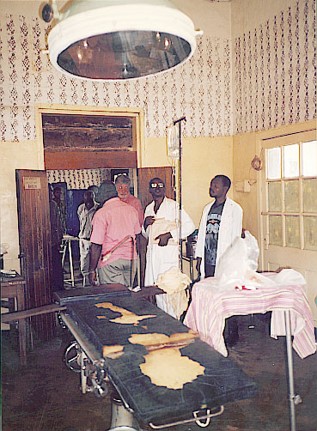
In a settlement by the Congo River I was shown around a hospital. The operating theatre was very basic. The state of the operating table wouldn’t matter to an unconscious patient. But what mattered for the surgeon was that the operating light hadn’t worked for two years and couldn’t be repaired. I asked how they operated with no light. ‘We pull the table near a window and do our best by daylight.’ No operating theatre where I was treated was like that.

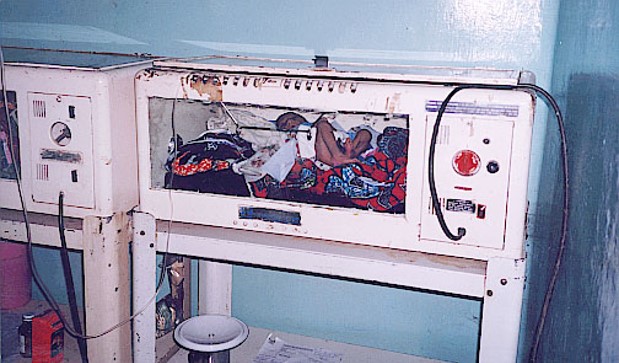
I saw an incubator where a tiny, premature baby lay. The incubator looked old, but had to be useful. It wasn’t really. The incubator didn’t work, and couldn’t be repaired. It was only a convenient small place to lay a premature baby. One of my children had jaundice when born. The incubator in which she was put wasn’t like that.

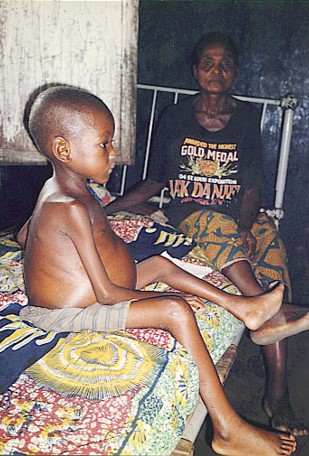
In another Congo hospital, I met a young boy who was seriously malnourished. His grandmother had walked with him through the jungle for three days to get help. No-one knew where his parents were; most likely they’d died. ‘Can you help him?’ I asked a doctor. He shook his head slowly. It was too late to save the boy. All they could do was make him comfortable. None of my children looked like that little boy or was beyond help like him.

I felt distressed taking these photos, and disturbed now just looking at them again. I also feel angry. This is not the world as it was meant to be, and not the world as it has to be.

So, who am I angry at?

At all of us who are complacent while others suffer    I include myself. Every year I give a percentage of my income to alleviate world poverty and for other causes, but I know my lifestyle is one that billions in this world will never have. That troubles me. I know that personal giving by any of us can’t solve world poverty. We could never give enough, and aid alone won’t resolve the complex reasons behind the poverty of many countries. But is it not true that our focus is on ever more comfortable lives for ourselves? How can that be right? I will keep urging myself and others to give careful thought about how we live and how much we spend on ourselves, compared to how much we give so others can at least eat. The measure of caring isn’t pity but what we do for those in need. Mahatma Gandhi said: “Live simply so that others may simply live.” Wise words.

At my own government    Let me explain my point with a little imagination. In your town, six families have lost their main income earner. One parent in each family now holds them together, but they need help. You’re generous, and you promise to support them until the children are older. But a storm blows your roof away. You have money to pay for the roof repair, but the cost has eaten into your capital. You want to replenish your reserves fast, and you do that by cutting the amount of support you give to the already impoverished families. Now they don’t have enough to eat and they can’t pay their bills, but you can rebuild your funds quickly. Their needs were sacrificed for your benefit.

The analogy isn’t perfect (no analogy is) but it’s uncomfortably similar to how the UK government has responded to the financial cost of the Covid-19 virus by cutting the overseas aid budget. The nation was giving 0.7% of national income in aid, but that has now been reduced to 0.5% – a drop of about four billion pounds. The government says that because the pandemic damaged the economy, the aid reduction will help restore public finances. So, let’s be clear what that means. We spent more than usual on health care and support for those out of work – which was right to do – and now we’ll restore our national wealth by taking money away from the poorest people in the world. Yes, we’re really doing that. Of course the UK should put its finances in order, but: a) if you look at the big picture, the UK is still among the very wealthy nations of the world; b) it’s hard to see any morality in restoring a strong financial position by making the poor poorer.

At other governments    Poverty has many causes. Historically, much wealth was taken from nations by colonial masters whose goal was to enrich the mother land. Even now, unfair contracts continue to blight some nations as other countries and large corporations want control of their minerals.

But poverty has plenty other causes too: discrimination against ethnic groups; incompetent and unstable governments; wars that kill civilians, devastate crops, and create millions of refugees; poor infrastructure and systems for trade; inadequate education, especially of girls; low provision of healthcare, clean water, safe working environments.

But, unquestionably, corruption is a major cause. In 2020 India’s Prime Minister, Narendra Modi, said ‘dynastic corruption’ was now a major challenge for the country. Where corruption persisted from one generation to the next, the country was hollowed out like the damage of a termite. It’s not just India where corruption is rife. In many places paying a bribe is just a cost of business, or how you get a favourable judgment in court. I’ve seen that most blatantly in Asia and Africa, but I’m not foolish enough to think corruption doesn’t happen in western countries too. Who is it that never benefits when there’s corruption? The poor. Their land is taken, and the affluent thief can pay off the police or judge while the poor farmer has no resources to regain the land. Corruption is a deep-rooted evil across much of the world.

I probably sound angry throughout this blog. I am. This is not how the world was meant to be or needs to be. Nothing described here has to be this way.

If my photographs or anything I’ve written is disturbing, I hope the evidence of desperate poverty moves all of us to make this world better. You may have seen the slogan ‘Keep calm and carry on’. Often that’s good advice. But if our reaction to desperate need in the world is that we do nothing and just ‘carry on’, then literally billions of our fellow human beings will suffer. That cannot be right. That’s not how the world was meant to be.

Blind to what’s obvious

How do we fail to see something that’s completely obvious? Later we’ll say ‘It was staring me in the face. How could I have missed that?’ But we did.

Motorcyclists have died when a car driver pulled out in front of them at a road junction. Afterwards the driver says ‘I just never saw him’. But the rider was there, plainly there.

Most of us miss errors in our writing. After I’ve written this blog, I’ll re-read it two or three times, correcting mistakes or improving sentences. Then I’ll print it out and my wife, Alison, will proof read it for errors and unclear meaning. After that I’ll go through the paper copy line by line, and I’ll find even more mistakes. Finally, all changes made, I’ll read through it one last time. And always – always! – I’ll still find another error. How did I not see that earlier?

In the first example the driver was blind to what he didn’t expect to see – a motorcycle. It was obvious, but he was looking for larger vehicles, not motorbikes. In the second example my eyes see wrongly spelled words on the page but assume they’re correct.

Blindness to what’s obvious is an odd phenomenon. But also a common one.

It’s a kind of blindness which can affect our view of big and small issues.

We’re blind when we don’t want to see what’s there    I’m writing a year and a half after Covid-19 began affecting everyone’s lives significantly. The number of infections and deaths runs into many millions, and most countries have had repeated levels of lockdown. My friend Richard said to me, ‘I’m fed up with lockdowns. I can’t accept another one’. A little impatiently I asked him what that meant – that instead of lockdown he was accepting he might get seriously ill or that he might make others seriously ill? He’s still my friend, but Richard didn’t like my questions. He didn’t want to see the hard reality of a virus we hadn’t overcome and may never wholly overcome.

I met similar defiance on another subject from Paul. He’s so utterly opposed to ideas of global warming or climate change he evangelises denial. He knows the vast majority of scientists argue differently, but he doesn’t believe them. Paul is not a scientist. He’s simply someone who doesn’t want to change his consumerist lifestyle, so prefers not to see truth in the scientists’ research conclusions.

I’ve seen much the same blindness in those who look down on black people as somehow inferior. And in men who can’t see why women would want the opportunities and positions of leadership and influence that they have.

These are not stupid people. But they deny overwhelming scientific or moral evidence and argument. They’re blind to what they don’t want to see.

We’re blind when we don’t recognise what’s there    That’s why the car driver says ‘I never saw the motorcycle’. Because he was looking only for bigger vehicles like cars and buses, he didn’t recognise what was right before him.

The same problem occurs with relationships. I can’t be the only person who’s tried to help a couple save their marriage but privately thought: ‘This couple should never have got married in the first place’. They’re struggling because they were always fundamentally unsuited. Perhaps others saw there would be problems, but the couple didn’t. And now the relationship is in trouble.

There’s an old saying ‘Love is blind’. It can be, but it never should be. People excuse or bypass problems they should recognise as serious. I’ve jotted down the kinds of statements people make, and added my own comments after each.

‘The problems will go away once we’re married.’ [That’s naïve. A wedding service doesn’t magically make deep-rooted problems vanish.]

‘This may be the only chance I’ll ever have to be married. I’m sure it’ll all work out.’ [False optimism can’t justify getting married. Marriage is great, but only between the right people.]

‘I’ll be able to change him once we’re married.’ [There are two problems here: a) it isn’t true; b) while she’s thinking she’ll change him, he may be thinking he’ll change her. Collision ahead.]

‘I really want to have children; nothing else matters.’ [I knew someone who married exactly on that basis. The parents and their children were miserable and damaged.]

‘Everyone thinks we’re a great match; we’ll be fine.’ [Everyone may be saying you’re a great match. But that may be no more than politeness or fear of sounding negative. In any case, they don’t know the inner reality of your relationship.]

‘Perhaps real love will come later.’ [There are marriages where that happens, sometimes in cultures with arranged marriages. But gambling on ‘perhaps’ is a bad bet.]

‘It doesn’t matter that we have different values and goals. All that counts is that we love each other.’ [John Lennon wrote the song ‘All you need is love’ while fascinated by the power of slogans. It became a hit, but that doesn’t prove the slogan is true. Where a couple’s values and goals pull in different directions, love will be under great strain.]

What these small scenarios have in common is a blindness to how things really are. Perhaps all their friends are getting married, so surely they should too. And they convince themselves that marriage will be wonderful while failing to see serious problems which will undermine a wonderful life together.

We’re blind when we don’t care what’s there     Some eat so much they’re seriously obese, ignore their doctor’s warnings, and take years off their life expectancy. Others drink to excess, damaging their liver and family life too. Or they drink and drive, risking death for them and others. Or (going back a few decades) they manufacture cigarettes and deny there’s any proof that smoking harms health. Or career climbers work 18 hours a day, ignoring signs of ulcers or heart irregularities. Or overbearing bosses create a toxic work environment with bullying and threatening behaviour. Or the management of a chemical plant pumps waste into waterways, contaminating drinking water. Or planners and builders pack so many homes into small areas, there’s nowhere for recreation, and cars congest streets which diminishes air quality to levels that damage health. And so on.

Perhaps all of us have our ‘blind spots’ – areas of life we don’t examine much in case we find something that should change but we don’t want to change. It happens at personal levels (such as eating, drinking, driving), management levels (wellbeing of staff or customers), planning and regulatory levels (quality of life issues). We don’t care enough to look closely at what’s happening with ourselves or the lives of others.

Some things are complicated. Losing weight or stopping an addiction isn’t simple for anyone. And planning in an overcrowded city is compromised by the need to house people. But other things aren’t complicated, such as the morality of promoting a lethal product or disposing carcinogenic chemicals recklessly.

At root, there’s a kind of blindness. If we don’t care enough to look, we don’t see the consequences of our actions. But later we regret not putting things right. One man said: ‘I didn’t value my health until I didn’t have it any more’. Exactly. He had been blind to how valuable his health was.

Of course, the challenge with any of these forms of ‘blindness’ is that we don’t realise we’re blind. We think we see the world perfectly clearly.

Two things can change that.

The first is that something shatters our delusion. It could be dramatic like driving straight into the path of a motorcyclist, or a marriage ends, or health breaks down. Or more gentle such as realising we’re out of synch with the views of most people.

The second way to change is by choice. The choice is determining to be open to new ideas or perspectives. Willing to rethink big issues. Willing to view people differently. Willing to change lifestyle. Willing to review the quality of relationships. And so on. It’s taking the risk of seeing truths differently from before. That’s not easy. You might need a real friend to help you, because it may involve accepting being wrong in the past, and rethinking how to live for the future.

But it’s worth it. It could end dangerous blindness in your life.

…………………………..

Thank you for reading this blog. I hope it’s been helpful. If so, please consider sending a link to someone who would also benefit, either by using the ‘Share’ button or pointing them to www.occasionallywise.com.