Celebration of discipline

The word ‘discipline’ has more than one meaning. So you know the sense I intend here, I’ll begin with a definition: Discipline is an attitude of mind and a way of doing things without which hardly anything worthwhile or lasting gets done.

Therefore, I’m not writing about discipline as punishment. During my school years in Scotland I had unwelcome meetings with the tawse[1] (the word is plural of taw which means whip) which inflicted considerable pain on my hand. Thankfully, this so-called discipline was abolished in the 1980s. Punishment is not what I’m meaning here when I use the word ‘discipline’.

Nor does my title ‘celebration of discipline’ imply the meaning of discipline used by Richard Foster in his 1978 book ‘Celebration of Discipline’. Wikipedia describes Foster’s book as an examination of ‘the inward disciplines of prayer, fasting, meditation, and study in the Christian life, the outward disciplines of simplicity, solitude, submission, and service, and the corporate disciplines of confession, worship, guidance, and celebration.’[2] It’s a remarkable book which has sold over a million copies. But I’m not writing about spiritual disciplines.

A few examples will show the sense of ‘discipline’ I mean.

Example 1    At the age of 17 I learned to touch type. (I was taught both shorthand and typing at a further education college, as part of training for journalism. There were only two males in a class with 20 females.) On large, old-fashioned typewriters, we learned to rest our index fingers on the ‘f’ and ‘j’ keys, and type fffff jjjjj, over and over again. Then we did fjfjfjfjfj and jfjfjfjfjf. The following week we did the same drills with middle fingers on the ‘d’ and ‘k’ keys, moving gradually from ddddd kkkkk to dfjkdfjkdfjk or kjfdkjfdkjfd or even dkfjdkfjdkfj. When more fingers and keys were in play, we moved on to simple words and sentences. Initially these exercises were mind-numbingly boring but, with practice, I did learn to touch type which gave me a great sense of achievement. While most of my fellow journalists typed with only two fingers and stared at their keyboards, I used eight fingers and one thumb (the other thumb is never used), and to this day don’t look at the keyboard. The discipline of those drills gave me a skill for life.

Example 2    For many years I prepared at least one but often two sermons every week. Often I’d write them out in full, some 4000 words each. There were two problems:

1) Never enough time to research and prepare;

2) Sometimes a mind blank about the next sermon.

There were two answers to those two problems:

1) The absolute deadline of an approaching Sunday. I had to be ready by then, which forced me to get on with the preparation;

2) The remark of Scottish theologian William Barclay about ‘writer’s block’: that the art of inspiration is the art of applying the seat of the pants to the seat of the chair. In other words, stop faffing about and get on with the work.

The discipline of the deadline and the discipline of just sitting down, starting the work, and letting inspiration come, meant my sermons were always ready.

Example 3    Twice recently we’ve noticed a woman go past our house, but she pauses after every two or three steps. Why stop like that? She’s training her young dog to walk on the lead by her side. She moves forward, so does the dog, but after only a few steps the dog pulls ahead. So, she stops, makes the dog wait, and then begins again. When the dog gets it right, it’s rewarded; when it gets it wrong, she never shouts, just waits and then they restart. Most importantly, she never gives up on the training. My wife Alison knows a lot about dog behaviour and she’s impressed. That woman’s discipline – of herself and the dog – will have huge benefits for years to come.

So, with these examples in mind, I hope you can see why, for this blog, I defined discipline as:

  • an attitude of mind
  • a way of doing things
  • without which hardly anything worthwhile or lasting gets done

Discipline is about how we think and how we act. And discipline is necessary to succeed in things that matter.

I’ll expand on each of these.

Discipline as an attitude of mind

I was probably only the right weight once: on the day I was born. That day came only a few years after World War II ended, while food shortages were still common. My parents’ idea was that a chubby child was a healthy child. In fact I was overweight. I’m still chubby, though keep protesting much of it is muscle. I’ve read various books on losing weight. One book effectively pronounced me a lost cause. The author said that, in middle age, almost no overweight person gets back to their ideal weight and stays there. The very few who maintain their right weight have rigid discipline. They’d achieve their daily step count no matter the weather, and would not eat even a single square of chocolate.

The rigidity of that statement troubled me then and still. But I got the author’s point that a seriously disciplined mindset was essential. I’ve known people try to break drinking and smoking habits who lost the battle early on because they told themselves ‘Breaking the rules won’t matter just once’ or ‘I can have a holiday day occasionally’. But those ‘just once’ and ‘holiday’ days soon become frequent, and the cause is lost. Sometimes being lax with discipline is immediately and seriously dangerous. If, when I’m riding my motorbike, I wasn’t unfailingly disciplined about doing my life-saver shoulder check, I might be dead.

Whether we’re thinking of personal safety or goal achievement, a ‘happy go lucky’ attitude isn’t good enough. A disciplined way of thinking is essential.

Discipline as a way of working

I’ve had six books published and contributed chapters to two more. Is it difficult to write a book? For me, the honest answer is ‘no’ and ‘yes’. At any moment I have 50 ideas of things I could write about, and at least one of them makes some sense and would be of interest. So I don’t lack a subject. Then, once the idea is clear, writing isn’t difficult for me. I’ve written easily since I was a child. I could churn out thousands of words a day if I needed to.

But I have at least two difficulties with a major writing project. The first is the simple but hard one of making myself sit down and type the words. My mind will flip to ten other things I could do, some of which will be more fun and give quick rewards. Writing can be a slog, and a book is a long game. The work is tough. The second challenge is editing. Writing the first draft for a book is creative and perhaps exciting, but after that comes revision after revision: correcting typos, clarifying thought, cutting unnecessary material, watching for contradictions, and so on. That’ll happen at least ten times, and I’ve edited some books more than twenty times. Editing is very tedious.

I deal with the first of these – making myself do the work – by creating a non-negotiable deadline (publishers often impose those anyway!) A favourite phrase of mine is ‘A deadline is the mother of motivation’. It works for me.

And I deal with the second – making myself do the boring work – by defining minimum targets I must meet each day. So, when I typed my 400+ page thesis on a typewriter where almost no errors can be corrected, my goal was three pages a day. I would get home from an evening meeting about 10.00, then type and retype from 11.00 to 1.00 in the morning to achieve three perfect pages. I could not do that every night (I was often travelling), but on every day possible I produced three pages without fail. It got done – and the thesis was accepted.

Each person will have their own method, but it must be a disciplined way of working.

Discipline as essential for anything worthwhile or lasting to get done

Three things fit under this heading.

First, you can be casual with trivial things but must be serious to achieve important things. When a young golfer began on the professional tour, his brilliant play got everyone’s attention. He won a few tournaments, and the experts tipped him for the top, saying that with his potential he’d win all the major championships. Yet as he moved through his 20s there were only a handful of modest successes. When he was 30, he admitted he’d put more into living the good life than into his golf game. Now he would change. But he didn’t change. He didn’t dedicate himself to practise or to follow his coach’s instruction, and never succeeded at the highest level. He lacked discipline, and never fulfilled his potential.

We’re constantly tempted to dabble. We do a little of this, then some of that. We start and then stop. We do what we like and avoid what we dislike.

Life can be lived without discipline. But it’ll be a life devoid of what’s most worthwhile.

Second, the best things in life last only with hard work. You can bring in a team of designers, gardeners, labourers and volunteers and create a beautiful garden in one or two days. Plenty TV programmes show that’s possible. But, all too often, the garden they make is at its most gorgeous only until the TV cameras leave, or for only a few days. Why not longer? Why not always? Because a garden is a living, changing thing, and without disciplines like weeding, watering, fertilising, pruning, cutting, planting its beauty won’t last.

Nor does a marriage stay wonderful without constant care and investment. Or a career mature without development and upskilling. Even a product needs continual adjustment or reinvention to meet evolving tastes and needs.

Disciplined hard work is essential for longevity.

Third, to win a race you must both start and finish. In London and Chicago I’ve watched marathon runners stream past heading for their medals at the 26 mile finishing line. I’ve stood off to the side thinking how marvellous it would be to run a marathon and get a medal. But there are two barriers for me. One, I’d never have the courage to enter. Two, I’d never have the ability to finish. And you don’t get the medal without entering and finishing.

Many read a novel and think they could write just as well as the author. Or listen to a singer and reckon their voice is just as good. Or consider they could give advice just as ingenious as the consultant their firm brought in. But they don’t do any of these things. They don’t start, or, if they do, they don’t finish. They lack determination and they lack perseverance, both of which require discipline. Only with those do the best things actually get done.

Let me finish with this. Some people are super-disciplined. Some people are ill-disciplined. Then there are those who are disciplined in some things but not others. I’m in that middle category. Usually I long to be more disciplined. I’d achieve more of the things that really matter to me. Yet I wouldn’t want the possible downsides, such as the inflexibility that I sometimes see in my super-disciplined friends. So, in respect of discipline, my report card would read: ‘Has some discipline, but might benefit from more!’ Perhaps you’d like to ponder what your report card would say…

———————-

[1] More about the tawse here: https://en.wikipedia.org/wiki/Tawse

[2] https://en.wikipedia.org/wiki/Richard_Foster_(theologian)

Celebration of ritual

Rituals get a bad press. The word implies something archaic, boring, mindless and pointless. Some rituals are. But I want to make a case for rituals, albeit rituals defined broadly enough to include reminders and procedures. Without those we’d lose track of what to do and how to do many of the important things of our lives.

But first I want to set aside the rituals which exist because people are odd or ill. Here are four examples I know:

  • When a senior manager attended a formal meeting, he always laid out three identical, good quality pens on the desk right in front of him. Likely he worried one might run out, hence having a spare. And then he needed a spare for the spare.
  • An office manager always had several pencils on his desk, all the same length, and all pointed in the same direction. When the manager went for lunch, juniors in the office would reverse some of his pencils. When he came back, the juniors watched to see how long before their manager noticed his pencils no longer all faced the same way. It was immediate, and he’d demand to know who had used his pencils.
  • One senior officer was always last out from the office at night. He’d switch off all the lights, then switch them on again, off again, on again, off again, on again, off again. Much the same happened with locking the outside door – lock, unlock, lock, unlock – at least four times before he could leave.
  • After everyone had gathered for the Sunday morning church service, Pastor George would leave his vestry, and join his congregation exactly on the hour for the service to begin. I mean ‘exactly’ on the hour. He’d watch the second hand of the clock count down and enter the sanctuary at precisely the right time.

I’m no clinician, but several of these seem like instances of Obsessive-Compulsive Disorder, which America’s National Institute of Mental Health describes: ‘Obsessive-Compulsive Disorder (OCD) is a common, chronic, and long-lasting disorder in which a person has uncontrollable, reoccurring thoughts (obsessions) and/or behaviors (compulsions) that he or she feels the urge to repeat over and over.’[1]

We’re tempted to smile at obsessive patterns, but OCD is no joke for the sufferer. Anyone with OCD deserves sympathy, not teasing.

So, to be clear, I’m not writing about uncontrollable or obsessive behaviour here, but about rituals we choose because they make our lives better. And, because they’re useful to us, we can celebrate them.

So, how do rituals make life better?

Rituals keep us safe

I’m usually last to go to bed, so it’s my job to make sure the house is secure for overnight. That consists of several tasks: 1) Make sure the dogs relieve themselves outside. That’s definitely important for them and us. 2) Once the dogs are in, check every outside door is locked, including the garage. 3) Fill the kettle so there’s no delay in making the first cup of tea in the morning. 4) Make sure all appliances and lights are off. 5) Close doors to retain heat.

I won’t be the only one with a last-thing-at-night routine. Nor the only who occasionally finds a door unlocked or a light still on. The ritual protects us.

In fact, we create many rituals to keep us safe, but we often call them rules, routines, codes or protocols. Think about these:

Safe crossing of roads: I was taught ‘Look right / Look left / Look right again / if all is clear, walk (don’t run) across’. There are more modern crossing codes now, but with the same aim. A young American, only a short time in the UK, got the ritual wrong. In a momentary mind-lapse, he stepped into the path of a car because he first looked left, as if he was still in America where traffic drives on the right. He didn’t die, but was so badly injured he never walked unaided again.

Driving routines: My driving instructor gave me a routine for every time I approached a junction or crossroads: mirror, signal, manoeuvre. That’s now been expanded and adjusted to M.S.P.S.L (Mirror, signal, position, speed and look). Motorcyclists have similar routines, with one important extra: a life-saver shoulder check. Motorcycle mirrors give limited vision, so glancing back on the side toward which you’re turning warns you if something has been in your blind spot. It’s saved me more than once.

Flying checklists: There are various checklists related to piloting and maintaining aircraft. Aviation historians say pre-flight checks were first mandated after a 1935 crash in Ohio. Accident investigators later found the pilots had tried to take off without disengaging the plane’s gust locks (which stop control surfaces moving in the wind while the plane is parked).[2] Both pilots died. These days there are checklists for each of several stages of an aircraft’s flight. You’ll be happy to know the final checklist includes ‘Landing gear – down’.

There are checklists for many industries and workplaces. But, by now you’ll have got the point – protocols are rituals that keep us safe.

Rituals bring welcome familiarity

Alison isn’t a fan of shopping in supermarkets she doesn’t normally use. ‘It’ll take me too long because I won’t know where everything is,’ she explains. Alison isn’t interested in browsing every part of a store. She knows what she wants, so shopping in her usual supermarket allows her to whizz round, get what she needs, pay, and go. Familiarity is her friend.

I like the story of the large department store which kept changing where the different sections were located. An exasperated shopper asked a member of staff, ‘Where’s the electrical goods department now?’ and got an equally exasperated reply, ‘I’m not sure but stay here and it’ll be along soon.’ Some changes are welcome, but we also appreciate familiarity, stability, even sameness. Rituals give us that.

In my earliest years as a church minister, I worried that Christmas services were much the same year after year. We sang the same carols, and Christmas sermons covered the same ground. It took me about ten years before I realised people weren’t expecting or needing novelty. They wanted to hear the old, old story told again and again, because the familiarity gave comfort. And their understanding of what it meant for God’s Son to be born in this world had grown and matured because of the regular repeating of the core truths about Christmas.

That constant focus on core truths is why some Christians follow a lectionary which focuses on major passages of the Bible (often on a three-year cycle), or structure their teaching around major Christian events (like Advent, Christmas, Lent, Easter, Ascension, and so on). Lectionaries have never been part of my tradition, but I understand why many find these rituals ensure everything major is covered, and that repetition enhances understanding. Rituals have those advantages.

Rituals keep us on track

The first time I needed a ritual was when I first lived entirely on my own. I was 18 and had a small bed-sit in a flat where the landlord wasn’t usually present. I would have a serious problem if I went out without my house key, so I developed a routine. Every time I opened the front door, I paused and checked the key was safely in my pocket. That ritual meant I was never locked out.

In another place where I rented a room, the landlady cleaned the kitchen and bathroom on Mondays, front lounge on Tuesdays, hallways on Wednesdays, and bedrooms on Thursdays and Fridays. Probably she did ‘spot cleaning’ in between, but it was mainly her weekly ritual that kept the house in good shape.

My mum had a less-regimented method for keeping our house clean, but her absolute ritual was spring cleaning. As the dark days of winter faded, it was time for the house to be vacuumed and scrubbed from top to bottom. Cupboards were emptied, carpets were beaten, furniture moved so corners impervious to normal cleaning were conquered. My dad was busy too. We had a very large garden, and in spring especially he worked there every evening and on weekends. The spring rituals were a big deal, and never missed.

Many rituals involve cars. One neighbour washed his car twice a week whether it needed it or not. I used to take the wheels off my car once a month, just to be sure I could if I got a puncture. I also checked all my tyre pressures weekly. One old car leaked oil so badly, I monitored its oil level every day (and carried a large can of oil in the car). Rituals kept me motoring.

Many Christians (and people of other faiths) make sure they take time to pray morning and night; some follow a three times a day pattern. Good rituals aid spirituality.

I asked a friend who owned a hairdressing business how frequently some customers had their hair ‘done’ – apparently some came every week. A golf store owner told me he had customers who bought new golf clubs every six months. I know people who buy a new car every three years. Some rituals are good but expensive!

Rituals can help psychologically

At the beginning of this blog, I identified rituals that have got out of hand and become an illness. But more moderate rituals help psychologically.

Most of us know the things that really matter to us. If we have a routine that gets these things done, we’re at peace. The flowers were bought for the one you love. The elderly relative was visited. The car was maintained. The study schedule was met. The medicine was taken. The budget was done. And so on. Now, all done, there’s no nagging worry that we’ve missed something important. Our routine prioritised what matters, and we followed it, so those things can’t prey on our minds. No ritual can guarantee every area of life will run smoothly, but it can ensure everything significant gets attention.

On the website of The British Psychological Society, a ‘guest blogger’ article suggests that even meaningless rituals boost our self-control by making us feel more disciplined. (You can find the article here: https://digest.bps.org.uk/2018/07/11/performing-meaningless-rituals-boosts-our-self-control-through-making-us-feel-more-self-disciplined/). I’m not a psychologist, so can’t evaluate the experiments described in the article, but I do understand the point being made – routines enhance our self-control and thus make us feel disciplined. That can’t be bad. Earlier I mostly described how rituals help us achieve more, but it’s interesting to think that rituals could also have a positive effect on our minds.

There are two reasons why writing about ‘rituals’ has been a strange subject for me. One, I dislike feeling imprisoned by a pre-defined way of doing things. Two, my friends would laugh at the idea of me recommending rituals. Not what I’m known for.

However, when I thought about rituals, I realised I’ve always had them. They’ve varied during my life, and never been the kind that gets written down and slavishly followed. But, I had a ritual about when I’d visit my dad when he was old and on his own. I have one now about how often I’ll play golf. And another about when I’ll write my weekly blog!

So, celebrate rituals. You almost certainly have them, and almost certainly benefit from them.

————————

[1] The NIMH have a useful website: https://www.nimh.nih.gov/health/topics/obsessive-compulsive-disorder-ocd#:~:text=Obsessive%2DCompulsive%20Disorder%20(OCD),to%20repeat%20over%20and%20over

[2] https://en.wikipedia.org/wiki/Preflight_checklist


Celebration of simple

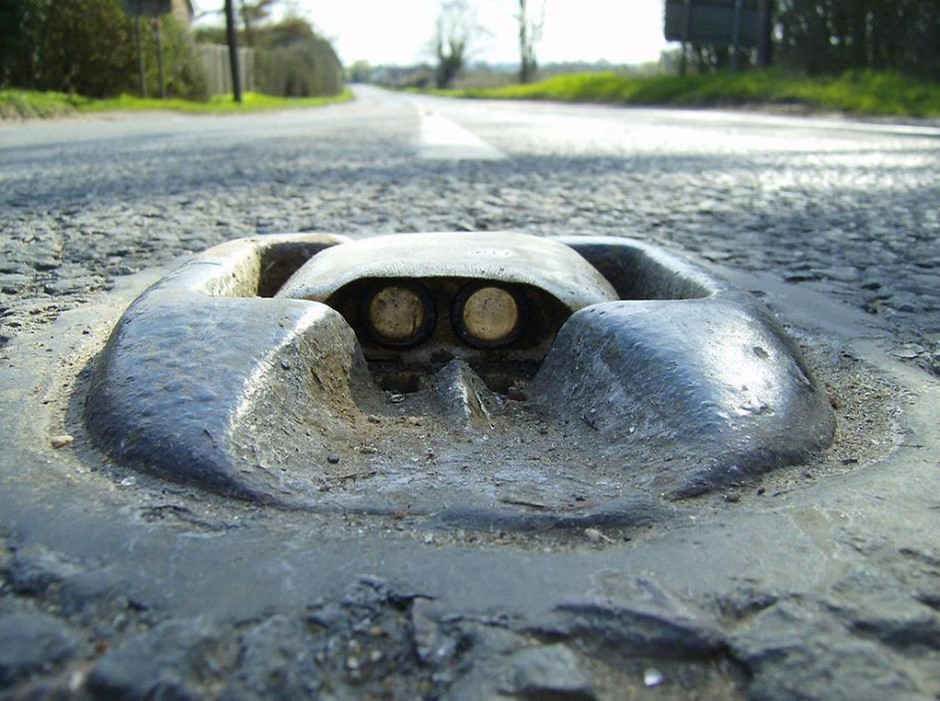
I was about eight years old, and in a car with my parents. We were driving on a country road at night. Ahead, along the middle of the road, I could see a row of lights, and my Dad was keeping the car just to the side of them.

‘What are those lights in the middle of the road?’ I asked.

Mum said, ‘They’re not lights. They’re cats’ eyes.’

I had an eight-year-old’s reaction to that answer. ‘Cats’ eyes?!’

‘Not actual cats,’ she laughed. ‘They’re mirrors, and just like a cat’s eyes reflect light back, so those mirrors reflect back the beam of our car’s headlights so we can see where to go.’

I was amazed, and, of course, asked more questions. How could we could drive over mirrors without breaking them? (They sink down when compressed.) How do the mirrors stay clean? (Every time a car runs over they’re pushed down into a tiny reservoir of rain water, and they get cleaned.) To this day I’m still impressed.

A ‘cat’s eye’ set in the middle of the road. Dozens more will be spaced about 20 yards apart. The white circles are the mirrors.

Cats’ eyes were invented by Percy Shaw. There are various stories of  how he got the idea, including seeing a cat’s eyes reflecting back light on a dark night, or noticing how light bounced off tram tracks set in the road. Whatever the true story, he had the genius to translate inspiration into invention, and he patented his cat’s eye design in 1934. Initially sales were slow, but grew considerably during blackout restrictions in Britain during World War II (because roadside lights were off). Soon his firm were manufacturing more than a million ‘roadstuds’ a year and exporting them all over the world.

Percy’s idea was simple, but brilliant and lasting.

Many inventions have been simple, and so obvious we wonder ‘why no-one thought of it before’.

The wheel is the most often-cited example. Before the wheel, people dragged things along the ground, which was difficult to do and damaging to whatever was being pulled. Then came the idea of laying round tree trunks across the path, and rolling heavy objects over them. Finally someone had the simple but important thought that those trunks could be cut into narrow circles and attached to the side of ‘carts’. Soon those ‘wheels’ were put on wagons and chariots, not unlike the wheels I have now on my Nissan chariot.

Buttons were first used in the Indus Valley (in modern day Pakistan) several thousand years ago. Tiny holes were drilled into a disc so it could be sewn on to clothing, and then fastened with a loop. Amazingly simple. It changed clothing design forever.

Nails were invented 5500 years ago. Before nails, rope was used to bind interlocking boards. But rope can be of variable strength, and tends not to weather well. Once techniques were invented to cast and shape metal, someone had the idea that short, sharp lengths of bronze could be used to hold lengths of wood together. The humble, simple nail was born, and we’re still using them, albeit now made of steel.

As you’ll gather, what fascinates me about these life-changing inventions is their simplicity. Because we live in a technologically-advanced world, we think inventions must be highly complex. Some are, but others – like the cats’ eyes – have been relatively simple. Just a matter of seeing how things could be put to a new use.

And that’s true for more than inventions. ‘Identify the simple and do it’ could be a useful life principle.

John told me his children had drifted away from him. They were teenagers – and, of course, teens often want to do their own thing – but John feared something more serious was happening. We talked it through. He reckoned the change had begun when his son and daughter were about eight and ten. They started showing little interest in talking to him or being with him. ‘To be fair,’ John said, ‘my work had most of my time anyway. I couldn’t be with them very much.’

‘So, in what ways were you involved with the children?’ I asked.

‘Well, I made sure there was money for them to have the best brand clothes that would impress their friends. And we gave them TVs for their bedrooms, and the latest computer games.’

I was gentle with John, but the hard truth was that instead of building a relationship with his son and daughter he’d tried to buy one. Before it was finally too late there was one simple and vital thing he had to give them: love. Which would mean: a) reserving time to be with them, doing what they wanted to do; b) being interested in their lives and futures; c) making himself someone worth relating to.

Often the best answer to a problem or need is not complicated, at least not in principle.

For many years I listened as people poured out their troubles. They found every day wearying. Their marriage had lost its lustre. They had unpayable debt. Their career was going nowhere. They drank too much, smoked too much, ate too much.

I never claimed there were simple solutions for these problems, but for some there were certainly simple steps they could take. Energy lacking? Stop sitting up late at night watching TV, and instead get a solid night’s sleep. Children distant? Marriage lost its excitement and joy? Invest energy, commitment, inventiveness, tenderness into the relationship, and be more interested in him/her than you. Overcome with debt? Get help, make a plan, stick to it. Career boring? Do whatever it takes to get out of the rut, learn new skills, consider changing career. And so on.

Is this simplistic? Yes, if words like these are meant as a total solution. But not simplistic if seen:

  • As a direction to start out on
  • As a guide to the heart of their problem.

I like the saying that a journey of a thousand miles begins with the first step, because it points us to a destination and encourages us to get started. The biggest decision is to take the first step. But of course after that there’ll still be many challenges, and a 1000-mile journey is wearying. But worth it.

So, to be clear:

Simple does not equal easy. What’s the cure for smoking? Stopping. Sounds simple, and it is when we’re defining the goal. And it’s an achievable goal. Many have quit. But it’s hard, very hard, and plenty give up. So, let’s be honest: there are simple answers, but nothing easy about achieving them.

Simple often (though not always) identifies the core issue. You’re driving and suddenly the car engine stops. You’re able to pull over, and you ponder why the engine has failed. Maybe there wasn’t enough coolant, it overheated, and the pistons melted. Or, there wasn’t sufficient oil and, without lubrication, the engine seized. Or your transmission fluid was low, the transmission overheated and gears were damaged. Or there were electrical problems, and the clever little computer sent the wrong signals to the engine which became confused and stopped. Which of these is right? None.

Because the right answer was the simplest of all. You ran out of fuel. You meant to fill up but forgot, and cars won’t go without fuel.

We can bury ourselves among options, but the simplest one is often the right one.

The simple solution may be right before our eyes but we don’t see it. There are at least two reasons we’re blind to what’s obvious.

  • We don’t see what we’ve never seen. Long before Percy Shaw, someone else could have invented cats’ eyes. All the necessary parts existed. But nothing like a cat’s eye roadstud had ever existed, so no-one thought of it before Percy.
  • Often our vision is clouded by emotion, panic, and haste. We’re overwhelmed by the complexity of our problems, and excitement or fear turn a straight line into a spider’s web. Panic, depression, anxiety mean we can’t think straight – our vision is clouded – we can’t conceive of any answer to our troubles. One of the least helpful things to say to someone entangled by emotion is ‘just think straight’. They can’t. They see everything through the prism of their fear or nervousness. Instead, be their friend, someone not caught up in their emotions, a person they trust who can help them take steps to a better place.

Simple can feel too challenging. Many of my golfing friends slice their shots (which, for a right-handed golfer, means the ball curves in the air from left to right). Slicing means losing distance and accuracy, so golfers hate doing it. But they don’t need to. They could stop slicing by changing their swing. But, even after lessons from a professional golfer, they don’t change. Why not? Because curing a slice takes hours of practice and ongoing discipline to erase the old habit and create a new swing pattern. Most won’t put in the work. They shrug, and say, ‘I guess I’ll always be a slicer…’

There’s a general truth here: it’s one thing to know a simple answer, and quite another to apply it. It happens with priorities, with lifestyle, and with attitudes. They could change. Getting more sleep and taking more exercise would improve life. Spending more time with spouse and children would vastly improve relationships. Learning new skills could transform a career. But, for many, these things are too challenging, and they settle for a permanent second best. Which is very sad. Simple is challenging but worth it.

One last story in celebration of simple. When I was a pastor in Aberdeen, numbers grew, we searched for a larger building and were eventually able to buy one. There was work to be done to get the place ready, but there was one unexpected and welcome find: a safe. It was built into a wall, and hidden behind a panel. We’d had a safe in our previous building, but it had stayed there. We were planning to buy a new safe for our new building, but good safes are not cheap. So, finding one already installed was great news.

Except we couldn’t open it. This safe was operated by turning a key and then a handle. There was no key and the handle wouldn’t move. It was locked. People had searched everywhere in the building for the key – searched several times – but there was no key. The only way to get that safe open was bring in a locksmith. Perhaps he had a professional secret for opening a super-strong safe. In a sense, he did. The locksmith listened as we explained that the safe was locked and there was no key. He stood and looked at the safe, then walked up to it, and pushed down very hard on the handle. The safe opened. The handle had just been stiff. And inside the safe? The key.

There are times when solutions really are simple.

Have you forgotten something?

I stared at the phone, willing it to ring. Why hadn’t she phoned? Alison always phoned. She’d call, say ‘I’m on my way – about 15 minutes – put the kettle on for a cup of tea’. So why didn’t she ring today? It was well past when I expected her home. It was freezing cold outside. Maybe her car hadn’t started, but then she’d call. Maybe she’d skidded off the road, and couldn’t call. Should I head out and try to find her? Then I saw why she hadn’t called. Her phone lay on the kitchen work surface. She’d forgotten to take it with her. Five minutes later Alison breezed through the door, saying ‘Forgot the phone, but have you made tea?’

Alison was fine, of course. Just forgetful. As I have been too. I left my phone in a toilet cubicle at a massive conference centre. When I realised it was missing, a deep dread ran through me. I ran back – no phone in the toilet now. Was someone already using it to call relatives in Australia? Alison, calmly, said ‘I’ll try calling your number’. It rang and a voice answered. The thief! No, a security guard. My phone had been handed in, and within ten minutes I was reunited with it.

We all forget things.

This week – one unusually busy for me because of my studies – I’ve kept this blog simple by jotting down situations when we forget things. (Those I remember, that is.) Perhaps they’ll amuse you; perhaps make you feel guilty (‘yes, I’ve done that too’), perhaps help you think more about what matters.

Here’s my list.

Appointments or events    Until I had my first job I never needed an appointments diary. My earlier life was going to school, doing homework, playing football, watching TV. Then I was off to the big city and the world of work, and life was more complicated. Journalism isn’t a 9 to 5 job, so I had to know whether I was starting at 10.00 am, at 2.00 pm, or 8.00 pm, and who I was meeting with, and when, and where. A diary was essential. Life was even busier when I became a pastor, with more who, when, where notes to make, plus details of events at which I’d speak, funerals at which I’d officiate, and wedding services I’d conduct.

I’d have been lost without my calendar-style diary. I’d forget half of what I had to do. Besides, some things simply mustn’t be forgotten. Imagine mourners gathered at a crematorium or graveside waiting for a minister who’s on the golf course. What if I’d been in my home office still writing a sermon, while at the church building wedding guests were getting restless in the pews, the bride on hold in one room, the groom in another, and the organist stoically playing her way through the whole hymn book? Forgetting engagements like those is professional suicide.

It nearly happened to my pastor friend Jack. He didn’t miss weddings or funerals, but he started getting phone calls asking why he hadn’t turned up for a meeting, or visited a parishioner with whom he’d made an appointment. Jack would apologise, of course. He was sure he’d noted these things in his diary, but clearly hadn’t. But the ‘where are you?’ calls kept coming. That’s when Jack discovered the problem. Somehow, in his old-style diary, the month of May had been printed twice. So he really had noted down his appointments, but when he checked for upcoming events he’d looked at the ‘other’ May, and found nothing scheduled. In the future Jack always checked his annual diary had 12 months, not 13.

Names    I’m impressed when someone I’ve met only once remembers my name. They must have a really good memory for faces. Some don’t have a good memory; they’re just good at noting down who they’ve met and anything they’ve learned about them.

I’ve scrambled through life without a great memory for faces, and without the diligence of writing notes about people. I did try making notes once, just after starting ministry in a new church, but then I forgot to consult it and eventually forgot where my list was. Which was not a lot of use. My biggest struggle was that, after you’ve met someone a couple of times, it’s too embarrassing to ask their name again.

My biggest name challenges happened at large conferences. I would have met many of the attendees before, but perhaps not for one or several years. They’d greet me, ‘Hello Alistair – how are you?’ and I’d lamely reply, ‘Well hello there… So nice to see you again’. I’d no idea what their name was. Perhaps they’d be wearing a name tag, but a furtive glance down to the badge was a dead give-away that you hadn’t remembered their name. Besides, at one conference, a lady complained to the organisers that she’d never had so many men stare at her chest.

But, when Alison was with me at a conference, she’d bale me out about names. First of all, I told her, ‘If I don’t introduce you to someone, it won’t be because I’ve forgotten your name!’ And, second, she devised her own name-discovery strategy. If I didn’t introduce her, she’d quickly step forward, shake the person’s hand and say, ‘Hi, I’m Alison, Alistair’s wife – what’s your name?’ and follow up with questions about where they were from, what position they held, and did they have ten children? (Okay, she didn’t ask if they had ten.) Alison rescued me many, many times.

Birthdays / Anniversaries    Probably most find some cards or gifts don’t arrive on time. Maybe there’s a message that ‘It’s on its way’, which could mean it’s in the post or on next week’s shopping list. Happily, I remember the date of my wife’s birthday and my children’s birthdays. Unhappily, that’s far from a complete solution because I don’t always remember to buy a card or present.

But, of course, Alison has a system. For the two of us, all these key dates are in our shared electronic calendar with reminders popping up several days before. For the wider family she also sends out ‘the list’ once or twice a year. As well as birthdays, it lists changes of address, phone numbers, and additions to the family such as new nephews and nieces. But some admit they forget to check the list. Hard to criticise when you’re guilty yourself.

My phone number    In the days before mobile phones, I knew my home number because I often dialled it. But now we call people, not places. That means many more phone numbers, but we don’t need to remember them because they’re stored in our phones.

My awkward moment occurs when someone asks me for my mobile number. I can never remember it because I never dial it. So embarrassing.

Where your car is    I can’t be the only who’s lost his car in a large car park. It happened most often for me while living in America, where a shopping mall would be surrounded on all sides by expansive parking areas. The problem wasn’t just the size of the car parks, but because you might enter the mall by one door and exit by a door on the other side of the mall – and not realise that the sea of cars ahead is a different sea of cars from where you parked. I’ve always found my car again, but not quickly. Some car parks erect signs showing row numbers. Which is very helpful, providing you don’t forget to look at the sign when you park your car.

Time zone    I include this one for American friends who follow this blog. I was scheduled to preach at a church in Indiana, and, since we’d arrive the evening before, our hosts had invited us for a Saturday evening dinner at a country club. All very nice. We set off from Chicago mid afternoon for the two to three hours journey to our next door state.

Then, when we were three quarters way there, my phone rang. Our host, very calmly, said ‘Are you about to arrive? We’ve been waiting for you.’ Alison and I looked at each other, checked the time, and suddenly it hit us: Chicago is Central Time; Indiana is Eastern Time. When we crossed the state line, we ‘lost’ an hour. It was 5.00 on our watches but 6.00 in Indiana. Thankfully, the problem was more amusing than serious, we adjusted the arrangements and eventually enjoyed our host’s company and dinner at the country club. [1]

Time zones are not an issue in the UK. We only have one. But, like many countries, we adjust our clocks by an hour in spring and autumn for the changing seasons. And every year, some people would arrive an hour late or an hour early for church because they hadn’t allowed for the time change. It’s easy to forget.

Things you’ve promised to do    I don’t often borrow library books. If I did, I’d go broke paying fines because I’d always forget to return them on time. If I promise to call or write to someone, I have to do it within no more than two days because after that I’m likely to forget. But I’ll probably remember a promise to help a family member or a neighbour with something practical, because the task will rattle around in my brain until it’s done. Nor have I ever forgotten to pick up one of our children arriving by plane or train – my angst about them waiting, feeling abandoned, would guarantee I couldn’t forget.

But I’m not infallible. It was early April, and for three evenings I’d watched The Masters golf tournament from America on TV. Now it was Sunday – the final round – and there was an evening church service at which I’d lead and preach. Thankfully coverage didn’t start until about 8.00, so with a quick exit and dash home I wouldn’t miss much. ‘Can I come with you tonight?’ my daughter Rachel asked. That was fine. She was 15, and had friends who attended evening services, so it wasn’t unusual for her to tag along. The service went fine. I kept a good pace throughout, not rushing but not dawdling. The sermon was on the short side, but apparently all the more appreciated for that. When the service was over, I greeted those leaving immediately but didn’t join those staying for coffee and chat. This was not the evening for lengthy conversations. I grabbed my briefcase, drove the five miles home, and settled down in front of the TV.

Then the phone rang.

‘Surely no emergency right now!’ I hoped.

The calIer was a good friend who’d been at the evening service. ‘Did you leave anything at church tonight?’ she asked.

‘I don’t think so…’ I began.

‘How about your daughter?’

Sharp intake of breath. ‘Oh no, I’m so sorry’ Quick thinking, ‘but would you like to come here and have coffee and cake with us?’

Laughter at the other end, ‘And bring Rachel with me?’

‘Yes, that would be wonderful’.

A lot of years have passed since then, but neither Rachel nor I have forgotten how I forgot her. Just as well I’m good at apologising. I’ve so often had to be.


Never forget the things that matter most to you    This is the last but probably most important on my list. You could be the most organised person in the world – a place for everything and everything in its place. You could schedule your tasks and appointments for every 15 minute slot of the day. You could have a system to recall any name, any number, any place you’ve visited. But if you forget to care for the things of highest importance – like your family or your health – the rest won’t matter. The same is true about neglecting your character, thus gaining a bad reputation and no longer being trusted. In the film Rob Roy, Rob is accused of a theft he did not do. Friends tell him to run and hide. But he can’t. ‘My honour is at stake,’ he says. ‘I must restore it.’ Reputation matters.

There are things you never get back once they’re gone. The relationship with your spouse or partner, and with your children. The respect of colleagues and friends.

We can laugh about forgetfulness, but not about being forgetful regarding the things that matter most. Never forget those.

———————

[1] Our main host that evening was Carl Erskine who was a pitcher with the Brooklyn Dodgers baseball team (later the Los Angeles Dodgers) when they won the World Series in 1955. He’s now 95 years old. https://en.wikipedia.org/wiki/Carl_Erskine


Cautious boldness

We use maxims, aphorisms and proverbs all the time. Short, pithy sayings that we think wise and helpful.

My parents taught me ‘Waste not, want not’ and ‘Every penny counts’. The Scouts gave me the motto ‘Be prepared’. Nowadays we warn children about ‘stranger danger’. Signs and ads say ‘Don’t drink and drive’. Short sayings are remembered, and often keep us right.

A few years back I coined my own to improve my golf game: ‘Cautious boldness’. Those two words have helped me win trophies. With golf, it’s sometimes best to play safe. Perhaps there are deep bushes alongside a fairway – time for caution. But you can’t be cautious all the time. If you’re on the green, putting from only a few metres, you must be bold. ‘Never up, never in’ is the right thought, because, obviously, no putt has ever been holed which didn’t reach the hole. So, I realised being cautious all the time was no good, and being bold all the time was no good. Therefore cautious boldness became my maxim – sometimes one, sometimes the other. Winning depended on knowing which was right in each situation.

That seemingly contradictory mix, cautious boldness, is also relevant to living life wisely and well. I’ll illustrate how it could apply in four contexts. The first two concern important life-directing issues. The other two are more down-to-earth, but perhaps will make you think and smile.

Relationships

Like many I suffered the teenage angst of wondering ‘Does she like me?’ and ‘Will she laugh if I ask her out?’ But I worked my way through my inner turmoil, occasionally holding back wrongly and occasionally pushing forward wrongly. Sometimes too much caution. Sometimes too much boldness. (It was all better in my early 20s when I met Alison…)

Getting the caution/boldness balance right is important too in long-term relationships. Let’s imagine Colin and Christine. Colin is struggling with depression. He feels his life is useless; he can’t see a good future. The last thing he needs, at that moment, is Christine telling him to pull himself together, to brighten up and be positive. Colin can’t handle that. Christine needs to take a more cautious, gentle, reassuring approach.[1]

A few years earlier Christine had her own struggle, albeit of a very different kind. She excelled in her administrative role for a large firm, and was often called on to supervise new colleagues. She had a gift for bringing out the best in them. One day the managing director asked Christine if she’d consider being appointed department head. Christine’s head spun, and sensibly asked for a day or two to decide. At home Colin listened as she poured out a catalogue of doubts and fears about her abilities. Wisely, Colin let Christine get it all out of her system, and then carefully but positively drew out from her an equal catalogue of abilities and strengths she knew she had. He followed that with encouragement, helping her believe this was a deserved promotion, and one good for her and for her firm. She took the job, and never regretted it.

There are times to exercise caution and times to offer boldness.

Career / work

In my journalism years I had two types of colleagues. One group were ‘journeymen’ (they were all men at that time). The news editor could send them to a meeting, where they’d take shorthand notes and write an accurate report of what had happened. Or they might interview someone making news, and write an acceptable story. But that’s all they did. They didn’t spot news opportunities. They never wrote in an exciting, captivating style. They just went about things in their quiet and cautious way year after year.

Some were different. They could do the routine stuff, but they had eyes and ears to discover news. Maybe it was something a politician let slip. Maybe they picked up on gossip about a sports star. They followed up on their leads, and often had a front page story in the next edition. They showed initiative and talent, and moved on fast in their careers.

I’ve seen the same distinction in other places where I’ve worked. One type of worker is slow and dependable, another type creative and pushing forward. Each has their strengths. But most of us can have both strengths. There is wisdom in moving between times of caution (working carefully and steadily) and times of boldness (offering new ideas, striving for advancement). Those with only an abundance of caution may come to regret the tedium of doing the same thing constantly. Those with overmuch boldness may find themselves promoted beyond their competence (aka, promoted to the point of incompetence).

Caution at times and boldness at times – when rightly judged – has much to commend it.

Driving

My friend Keith, a policeman, was an examiner for motorbike riders attempting to pass an advanced test. He’d been my examiner, and we’d remained friends afterwards. ‘You wouldn’t believe,’ he told me one day, ‘how many flagrantly break the speed limit while taking their test.’ Keith eventually realised they never rode within the speed limit, so it didn’t occur to them to ride differently during the test. ‘And speeding is a definite failure,’ he said.

Interestingly, though, just as you can fail an advanced test for going too fast, you can also fail it for going too slow. I’ve taken both car and motorcycle advanced tests, and, thankfully, remembered the formula for getting the speed right: ‘make good progress’. In other words, don’t go too slow because then you’re a hazard, and don’t go too fast because then you’re a danger. So, in a 30 mph area, I should aim to drive or ride very close to 30, but not more than 30. That’s good progress.

Not everyone makes good (and safe) progress. We’ve likely all moaned about a slow driver on a standard (single lane each way) road, with tight bends, oblivious that there’s a queue of 20 cars behind with frustrated drivers because there’s next to no chance of a safe overtake. It’s little better on a busy motorway. The slow driver cruises along at 40 or 50 mph in the middle lane, causing a blockage and hazard as cars jostle to move into the outside lane to get past. (In the UK, going past another car on its nearside isn’t allowed.)

Of course I’ve seen many dangerous attempts to overtake on narrow roads, and plenty times, when I’ve been driving on a motorway at the speed limit of 70 mph, a car has roared past me doing at least 90 if not 100 mph. Is it a sin to pray there’s a police speed trap just ahead? If so, I have sinned.

People die trying to overtake someone who’s dawdling along at a dangerously slow speed. And people die because they’re driving far too fast, killing not only themselves but possibly others too. There are times to be cautious and times to be bold. Lives depend on judging which is appropriate.

Practical tasks

I have no memory of my father doing DIY jobs around the house. He worked, played golf and did gardening. He didn’t repair or maintain things. So, when I left home aged 16, I’d no idea how to look after a property.

I learned fast when, with family help, I bought a near 100-year old tenement flat in Edinburgh. It was affordable for two reasons: 1) It was very small, just two rooms; 2) it had never been modernised – it had an old range, electric wiring hung loose, there was no bathroom, and so on. There was plenty to fix. I couldn’t take on a complete renovation of the place. That would involve new walls, new electrics, new plumbing, which would require experts. But there were innumerable small jobs.

I got hold of a DIY book, read the relevant sections, and did my best. Much was trial and error, but I soon learned how to drill holes, use wall plugs, and hang towel rails or shelves. I replastered a section of wall – not perfect but acceptable. I stripped about seven layers of wallpaper away, including varnished wallcoverings which may have dated from the flat’s construction. After a while I was quite good at DIY.

It was several years before I had a car, and the first was not at all in good condition. I set about treating the rust with metal brush, fiberglass, filler, hardener and careful, gentle rubbing to get the surface perfectly smooth. Eventually I resprayed the whole car. In the engine area I put in new spark plugs, adjusted the tappets and fitted a new clutch. The sills on the underside of the car were rusted through, so I welded fresh metal in place. I had to do something about the car’s poor braking, so bought new brake shoes, fitted them, and, thankfully, the car stopped when it was meant to.

As the years went on, I did less DIY work. For three reasons:

  • I simply didn’t have time. My real work was all-consuming.
  • We had enough money to pay mechanics, plumbers, electricians. They did things better and in a fraction of the time I would have taken.
  • I realised the limits of my skills, and that I’d probably overstepped those limits in the past. There were no disasters, but there might have been. It was time to be more realistic about what I could do and what it was best I didn’t do.

But I’d learned that with a lot of courage and a bit of skill I could do many practical things. There was no mystery about most of them; nothing about which to be frightened – and a lot of money could be saved. But, the wisdom of the years taught me about my limits, and when it was best (and sometimes legally required) to bring in professionals.

Times for boldness and times for caution.

Two last things.

First, I don’t believe for a minute that DIY is a ‘man thing’. While working in America, a colleague mentioned his wife was visiting her parents for a few days, so he’d be on his own. ‘But,’ he said, ‘I won’t be idle. She’s left me a long Honey Do list’. I had to ask what a Honey Do list was, the answer being ‘Honey, I want you to do this and do that’ – a long list of jobs his wife wanted done while she was away. (Go online, type in Honey Do, and you’ll find templates for a Honey Do list, plus innumerable posters or cartoons related to it – my favourite is of a skeleton on a bench with the caption ‘Waiting on that honey-do-list to be done’.)

I’m happy to report that my wife, Alison, is very capable with DIY – mending our shower, unblocking sinks, laying carpet, painting, wall-papering, sharpening tools, repairing appliances. She’s about to replace a tap washer (which she’s done before). But, like me, she’s well aware of her limits.

Second, I’ll tell the story of when we literally pushed our personal boundaries.

Alison and I lived in that tenement flat after we were married. We modernised most of it, but of course it was still very small. When Alison was pregnant, we knew a baby came with baggage, and we’d need another chest of drawers to store baby things. Except, we didn’t have anywhere for another chest of drawers. There never was a lot of wall space, and every inch had something against it already. Except the back wall of a deep cupboard. We measured its width, bought a chest of drawers an inch or two smaller, and thought ‘problem solved’. It wasn’t solved. We’d only measured the back wall, and the doorway into the cupboard was narrower, even with the door removed. We could carry the chest of drawers into the cupboard by turning it sideways, but then it had to be straightened, and at an angle it was wider than the cupboard, so that didn’t work. So, we took the chest of drawers out again, thought hard, thought some more, and then we knew what to do.

First we took out the drawers and then dismantled the ‘carcass’. Off came the top, sides and back panel, leaving us with the equivalent of a modern ‘flat pack’. We took all the parts into the cupboard, and reassembled the chest of drawers facing in the correct direction. Alison was at the far end of the cupboard to screw the back panel into place. She did her job perfectly. But, of course, Alison was now completely blocked in behind the chest of drawers. However, we had a plan. I’d lift the chest of drawers as high as I could, spread my legs as wide as I could, and Alison would crawl out underneath the chest and underneath me, and then I’d lower the chest in place. At any time that plan was at the far edge of boldness because the chest of drawers was not light and the space for Alison to crawl through was small. At this time there was another complication. Alison was now fully nine months pregnant. But we had to try. I spread my feet to each side of the cupboard, lifted up the chest of drawers, Alison crawled, and all was well. Our son was born two days later.

(When we eventually left the tenement flat, the chest of drawers was dismantled again to get it out of the cupboard, then later rebuilt, and used in four other homes for over 20 years.)  

I tell that story hoping only to amuse. But perhaps it has some lessons. We were thoughtless in our purchase, but bold with our idea for how we could fit the chest of drawers into the cupboard, and then actually quite cautious/careful about how we did it. But I would urge: be bold about what you do, but super cautious when someone is nine months pregnant.

—————————

[1] During my own time of deep depression, Alison had the wisdom not to scold me for feeling so low, and not to offer trite solutions. But, when I was at my worst during the darkest hours of the night, I’d feel her hand take mine gently and just hold on. It was all I could cope with, but also all I needed.