It’s complicated!

Deep brown eyes gaze at me, pleading that I’ll be quick. But I can’t go faster. The straps I’m winding round her are difficult.

This should be easy. Loop one strap around her front paw, reach beneath her neck for another strap, pull it round and fasten both straps with buckles to the main harness. Then Ciara will be ready for her walk. But our dog is not ready. The theory is easy, but fastening that harness is annoyingly complicated. I almost tip Ciara over getting that first loop round her paw. I fix that, then probe through the jungle of hair under her body for the long strap. I find it, pull it up and secure it. Done! Relief. Until I realise I’ve joined the neck straps to the body straps. That’s hopeless, far too tight. I got it wrong. Again. Because it’s complicated.

Many things in life are complicated. Some are trivial; some are serious.

For example, in my late teens I dated a great aunt. I really did. And I knew a young student whose father was older than her grandfather. Complicated? It was. But their situations are at the humorous end of the scale. Not at all humorous was the tragedy of the mum aged just 32 who died of cancer, leaving her 28-year-old husband to care for children both aged less than two years. His distress was immense. So was his fear about a wretchedly lonely and complicated future for him and his children.

Most of life is a mix of good and bad. Some things go well, others don’t. And the latter is often riddled with complications. I’ll describe three complicated areas, adding some ‘truths’ in hope they may be learning points.

Health

While Alison and I lived in the US, we tried attending a small home-based Bible study group. We were made welcome by about ten others. The Bible study went well enough. Then the leader said we’d pray for the needs of those present. Everyone should share their struggles. Ten of the twelve in the room talked about their hip or knee replacement surgery. Some were waiting for the operation; others were recovering from the operation. Alison and I were the only two never to have had or need hip or knee surgery. Clearly that wasn’t the group for us.

Bonnie, a work colleague, mentioned she’d recently been operated on for skin cancer. Several small incisions were done to remove damaged, cancerous skin. She seemed relaxed about the procedure. No wonder. It turned out that was the third time Bonnie had been treated for skin cancer. Soon she was planning to retire to one of America’s sun states. Would she be more careful? “Probably not,” she said. “I just love lying in the sun.”

There were lifestyle issues of weight and habits for all the people I’ve just mentioned. I won’t spell them out because ‘shaming’ people is hurtful and unproductive. However, I can list two truths.

First, almost everyone has health issues. My wife, Alison, studied health science at university. In a sociology of medicine class, she recalls the lecturer saying that most people think their health is poor while everyone else has good health. But, he said, most people don’t have good health. That’s the norm. And, since people now live longer, their older years will have an even more complicated health story. But they won’t be unique; almost everyone else will have illnesses too.

Second, it’s hard to maintain good health throughout our lives, but we’d probably be healthier when we’re old if we had looked after our minds and bodies when we were young. Philosophers describe that as our ‘moral responsibility to our future selves’. If we’d made different choices decades earlier, we’d be fitter and stronger in our older years. That’s not complicated to believe. It’s just hard for our younger selves to do.

Money

Imagine you open a bedroom drawer, and, hidden under clothes, you see a bundle of papers. You pull them out. They’re bills, and almost all are printed in red because these are final demand notices. Failure to pay will result in court action. That happened to Tammy. Husband Mike had been buying luxury goods, each time taking out credit but not keeping up with payments. “He handles all our finances. I had no idea we had any debt”, Tammy told me. That was a financial problem, but also a problem for their marriage. Complicated.

Others have faced equal or worse financial strain. Sol and Martha had bought and bought, and when a bank or company refused more credit they found alternative lending sources. Inside three years they racked up more than 20 separate debts. Now each bank, credit card company, and short term loan service was demanding payment. Some were far from polite. Debt collectors called Sol and Martha day and night. Representatives banged on their front door late in the evening, frightening their children. Bernie and Clara’s situation was similar, but matters had escalated. Now, not only did they have final demand letters, but legal notices appeared in local press announcing that their household goods would be sold to clear their debts unless payment was made within two weeks.

One of the members of the Bible study group I mentioned earlier didn’t just have hip troubles, he’d been so seriously in debt he’d gone bankrupt. But, he told the group, he was getting back on his feet with a new venture. As we left the meeting, he slipped his business card into my hand, saying he’d be happy to help me. I glanced at it. He was now a ‘Financial Advisor’. He was recovering from bankruptcy by becoming a financial advisor. If ‘complicated’ is not the right word for that, perhaps weird or even outrageous is. He did not become my advisor.

Kathleen was one of few who dealt with her spending. Her problem had been the ease of buying with her credit card. She had a generous credit limit, so she’d bought and bought and bought. She’d hand over her card, and give little or no thought to paying for her purchases later. When her credit card statement came, the amount she owed shocked Kathleen. Thankfully, instead of pretending there wasn’t a problem, she cut her credit card in two, refused all future cards, and paid off her debt month by month until she owed nothing.

Another two truths.

First, managing money is complicated, at least in part because credit is so easily available. It hasn’t always been like that. Most people in past generations lived in a largely cash society, and, though borrowing was possible, normally the weekly budget couldn’t stretch beyond the weekly income. That’s not how it is now. So we need to be careful.

Second, when finances are getting out of control, we need Kathleen’s ruthlessness. We cannot only be in love with the idea of being debt-free. We must be willing to sacrifice our desires in order to get there. Otherwise, only disaster lies ahead.

Parenting

Not many things in life are more complicated and more demanding than parenting. In the early years, you’re constantly exhausted as you struggle to get the baby to feed, to sleep, to stop crying, and all the time you wonder if what you’re doing is the right thing. So many uncertainties. So many worries. We’d heard stories of new parents who nudged their sleeping baby just to be sure the baby was alive. It seemed ridiculous. But we did it too (though only with our first). Parenthood was so complicated and concerning.

Looking back, we wonder how we survived some challenges. When our first two were four and nearly two years of age, they developed whooping cough. They had been vaccinated, but many others hadn’t so even vaccinated kids became infected. We hadn’t realised how serious whooping cough could be for babies and young children. We soon learned. Every time the whooping began we had to pick up the child, make sure they weren’t choking on their own sickness, and help them find another breath after every major whoop. To add to our own difficulty, Alison was more than eight months pregnant.

Late at night we’d go to bed. No sooner asleep, we’d waken because one of the children had begun whooping. I’d run first, Alison followed. After we’d tended to their needs, we’d get back to bed, but before long the whooping would begin with our other child. We got no consistent sleep. The children’s condition worsened, and one night we were wakened 17 times. Next morning our doctor decided enough was enough. This was dangerous for Alison and the baby she was carrying. He made phone calls, and told us to take the children that day to a hospital in the city where a special ward had been opened because of the whooping cough epidemic.

We walked into the ward, holding our children’s hands. We stopped, stunned by what we saw. The ward was large and old-fashioned with baby cots and small beds lining each wall. We saw nurses hurrying to toddlers who were whooping and running to pick up the babies. Someone told us later that not every baby survives whooping cough. We couldn’t turn around and go home. That would solve nothing, and physically we were spent. We had to leave our children there. It was heart-rending. We walked away with tears in our eyes.

Next morning Alison went into labour. That was a week before her due date, but babies don’t have calendars. Happily, a few hours later our third child, a little girl, was born in the local maternity hospital. We were thrilled, but her arrival meant the children already in the city hospital couldn’t come home. There had to be no danger of infecting our new-born before it would be safe to release them. So I drove 15 miles each day to the whooping cough ward to be with the children, while Alison stayed longer than usual in the maternity hospital because no-one was at home to give her support.

Nothing had changed by Christmas Day. Alison and I had agreed I should prioritise time with the children who were still very ill with whooping cough. So I headed into the city with bags of presents. Back in the maternity ward Alison sat on her bed with only our new daughter for company. Other mums and babies had family and friends celebrating Christmas with them. No-one visited Alison. People looked at her pityingly, wondering if she was single and abandoned with a baby. At 8.00 that evening the ward was quiet when, at last, I was able to get to the maternity hospital and spend time with Alison and our daughter. We were thankful for the care our older children were getting, and thrilled our new baby had been born safely. But it was a wretchedly difficult Christmas. Alison and baby came home soon after, but not yet the older children. They were five weeks in the whooping cough ward before doctors decided there was no danger from them to our new-born.

Even now, we wonder how we got through that time. Nothing – absolutely nothing – had prepared us mentally or physically for that experience. Parenting is no simple matter.

What was also complicated and stressful in the early years was the barrage of advice directed at us. People love to give their advice on parenting, but they never all give the same advice. Managing conflicting opinions, especially from parents and parents-in-law, can divide couples.

Anyone who’d raised children had strong opinions about feed times – some advised ‘make the baby wait until the next scheduled feed’ while others were ‘feed on demand’ advocates. Ideas were divided too on cloth nappies (diapers) versus disposables, how babies should be laid down for sleep, whether or not to wrap them up tight, how they should be carried, or dressed, or encouraged to stand instead of crawl. Some insisted babies should be weaned off breast feeding by six months; others told us to continue (with other foods too) until the baby was no longer interested. An aunt told Alison she shouldn’t talk too much to our baby son as it would be bad for him later (nonsense). During their earliest years, we chose not to give the children chocolate or sweets (candy). Family members didn’t like that, and told us our children were deprived. The issue of potty training saw the fiercest conflict. ‘Dangle the baby over the potty right from the beginning’ was one view; ‘no need to bother until the youngster can ask for the potty’ was the other. Neither side in that debate would compromise. It was their way or the wrong way.

With child number one, all that unsought advice unsettled us. We wanted to do things the right way, and conflicting advice bred uncertainty. Just having a baby was wearying, but we were being wearied even more trying to please others. After several months Alison and I had had enough. It was obvious there was not one ‘right way’ about most things. You could perfectly well look after babies using several methods. So, that day, we made a firm decision. We would not be driven by the opinions of others. Our children were our responsibility and, while of course we’d heed wise advice, we would do what we truly believed was best. We couldn’t be buffeted from side to side because someone thought their way was better.

The task of parenthood never ends. It just changes as the years go on. Alison and I don’t envy the modern issues of children and video games, social media, mobile phones. Today’s parents are ‘blessed’ with plenty of conflicting advice on all these complicated concerns.

Three truths.

First, after years of counselling people whose lives were still being negatively affected by their upbringing, I was left with the overwhelming certainty that the absolute priority for parents is to love their children unconditionally. To really love is, of course, to provide all the children really need, and also not to provide what is truly harmful for them. For us, that meant giving them a healthy diet, lots of exercise, and encouraging their interests without trying to direct their lives. And, above all, to tell them often they were loved entirely and always.

Second, be assured that children who are loved survive their parents very well. The complications of raising children breed fear of getting something wrong. But most of what worries us won’t ultimately matter. I’ve seen parents who didn’t dress their children too well, let them go places others wouldn’t, and weren’t great at keeping the home tidy. But the kids knew they were wanted and valued, and their parents’ strong love turned them into happy and mature adults.

Third, parenting may be complicated, but having children is a wonderful privilege, and a great blessing – including when they’ve grown up.

As I close, you’ll be relieved to know the great aunt I dated was not my great aunt. But Jenny really had been a great aunt from the age of nine. How could that be? Here’s how. Jenny was adopted by parents aged in their sixties (not possible now). They already had children in their forties (her sisters/brothers), who had children in their twenties (her nieces/nephews), who had children when Jenny was nine years old, making her a great aunt.

What about the student whose father was older than her grandfather? That makes sense when you know her father was older than her maternal grandfather. The student’s mother had married someone about 25 years her senior, a delightful man but older than her father. Hence their children, including the student, had a father older than their grandfather on their mother’s side.

Life is complicated? Yes, it’s complicated.
Even more wisdom

Dictionaries struggle to define the word ‘love’. Because it’s not a ‘thing’ it’s hard to describe, so dictionaries use phrases such as ‘strongly liking another person’ and also talk about romance. Not exactly comprehensive. But, since you can’t put love under a microscope you can’t analyse its constituent elements. You can only talk about how love is felt or shown, especially when that love is between people. (Loving your job, your house, your garden, even your dog, isn’t quite the same.)

Describing wisdom is as problematic as describing love. You can’t sum up wisdom with a word or phrase; instead you give examples of wise decisions or actions. That’s what I’ve done in the last two blogs, and this one isn’t different.

I’ve listed six categories in which wisdom matters. I could have listed 16, and by next week even more. But one I’ve listed here is about knowing when to stop, and I will stop writing about wisdom (at least for a long time) after this blog.

Here goes with (hopefully) even more wisdom.

Value

Oscar Wilde wrote that a cynic was ‘a man who knows the price of everything and the value of nothing.[1]

It’s a great line, and likely true concerning many people. The second half is disturbing: that, someone could know many things but know nothing about their value. Not know where worth really lies. Not know what’s truly important.

Wise people don’t make that mistake. They understand what matters, and they prioritise and pursue those things rather than the trivial and ephemeral, things that are unimportant and don’t last.

I’ve been privileged to pour myself into work that has deeply affected people’s lives, both in the UK and many other countries. I have seen some people change; others, scattered around the world, I simply knew about through friends and colleagues.

Not everyone can have jobs aimed directly at transforming and improving lives. Sadly, some have hated their jobs. Their work, it seemed to them, contributed nothing other to boost the profits of a large multinational corporation. Why did they not find other employment? They didn’t leave because they were well paid. One was so well paid he had three cars: a Jaguar, a Porsche, and a Maserati. And he bought a ranch as well. I’m not suggesting cars or a ranch are ‘sinful’ – just that directing your life towards accumulating wealth or owning ‘things’ produces no lasting worth.

Wise people know where value really lies, and set their goals accordingly.

Health

My mother started smoking in her mid teens, a long time before the general population had any idea that cigarettes were harmful. My father probably started around then too, but never smoked heavily except perhaps during World War II when he was in the army. As my brother and I were growing up, mum and dad both discouraged us from smoking because ‘it causes shortness of breath’. But – unknown to them – smoking was much more serious than that. It was killing them. My mother’s heart was badly affected, and she died aged 55. My dad immediately stopped smoking but that couldn’t eradicate the damage already done. He had a massive heart attack when 64, and survived it, probably because he was already in hospital and got immediate attention. He reached 79, and then died of a second heart attack. Our most favourite aunt – my mum’s sister – smoked all her adult life, and she died aged 74.

You’ll gather I have strong feelings about the harm cigarettes do to the human body. Thankfully I took my parents’ advice and never smoked, not even once.

This paragraph isn’t meant to be a rant about cigarettes, but a statement that wise people take good care of their health. At a minimum that’ll involve a good diet and exercise. I married well, and Alison ensures we eat only what’s good for us. Diet: tick. And we walk our dogs up and down hills every day, and Alison is a committed gardener while I play golf two or three times a week. Exercise: tick.

I spoke at a large conference in the north of Scotland, a talk during which I said we should care for our health to avoid hastening death. One man came to me straight afterwards, anxious to persuade me that we can’t hasten our deaths. We can die only when God has ordained it. My answer was along the lines that God has ordained that we care for the bodies he’s gifted us so we can fulfil all the potential he’s invested in us. That man and I didn’t argue, but also didn’t agree. Oddly, we stayed in touch, became friends and that led to the publishing of four of my books.

Whether we believe our bodies are gifts of God, wisdom dictates we care well for them. Damage your body at your peril. You can’t trade it in for a replacement.

Family

I have attended many retirement events, at which we celebrated people’s long service and achievements. At the end the retirees would speak. Almost always they’d say that if they had it all to do over again, they’d give less time to their work and more to their family. It seems their children had grown up strangers to them. I vowed to never have to give that speech. Certainly Alison and the family made sacrifices because of my work, but we all survived, and now our grown-up children are our best friends. We get on great. Whatever wisdom helped that happen, I’m grateful for it.

Destiny

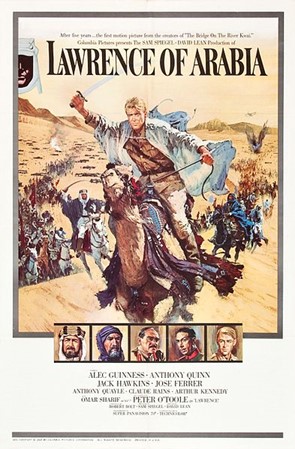
Image in public domain

In the 1962 film Lawrence of Arabia, based on the life of T.E. Lawrence, there’s a short scene that influenced me significantly. Lawrence is doubting he can continue leading Arab tribes in battles against the Turks during World War I. Exhausted and emotionally troubled, Lawrence considers giving up the fight. Then the top general challenges him with words like these: ‘Many go through life with no awareness of a destiny. But it is a terrible thing to have a destiny, and not to fulfil it.’ Those words stir Lawrence, lift him from his depression and weariness, and he presses on to win significant battles.

The words in the film were probably the work of a script-writer and not original. Yet they captured Lawrence’s situation, and impacted me when I was worn down. I knew I had a calling, a destiny, and it hit me freshly that it would be terrible not to fulfil it.

My guess is that most people don’t think of having a ‘destiny’ for their lives. The word sounds grandiose. But many do have some sense of purpose or opportunity. There is something they could do and should do. It would be terrible to reach old age and suddenly realise they’ve left it too late to do what they’ve always believed they were in this world to do. A wise person thinks early on about their purpose and potential, and moves steadily towards that goal.

Starting and stopping

I’ve always been tempted to take on more things than I can handle. Giving in to that temptation inevitably leads to stress and incompetence – stress, because we’re overworked; incompetence, because there’s only so many things we can do well.

But most of us are under constant pressure: to join a committee, take on a task, support a good cause. I’ve been asked to lend a hand – it sounded so innocuous – ‘I just need a little help with a project…’ Before long I was doing the project and he’d gone fishing.

Perhaps the only way to have a quiet life is to be hopelessly incompetent, because then no-one asks you to do anything.

Incompetence, though, is a bad solution. Rather, the wise person considers whether a new thing is a right thing.

To be a right thing, three conditions have to be met, best done by asking ourselves questions:

  1.  Does this thing fit with the particular gifts or abilities I have? Most of us could do all sorts of things, but there are some things we’re particularly good at. Those things – which especially fit our skill-set – are likely to be the tasks we should take on.
  2. Should someone else be doing the new task? Many things can be done by many people, so this task doesn’t specifically require me. Just because I could do it doesn’t mean I should do it. Beware those who say, ‘You’re the only one I could ask’ because the real truth may be that ‘You’re the only one I have asked’. Some people don’t look far afield when enrolling help. Don’t be a soft touch.
  3. Can you stop doing other things in order to do the new thing? There’s a saying, ‘If you want something done, ask a busy person’ – because they’re the kind of person who’ll say ‘yes’ when asked to help. But that’s exploitation. They hate to say ‘no’, so soon become overloaded. Unless, that is, they let other things go. I wrote an earlier blog under the heading Necessary Endings (available in Archives, April 11, 2021). I’d been helped by a book with that title by Henry Cloud, a clinical psychologist. He sums up his message early on: ‘…the tomorrow that you desire and envision may never come to pass if you do not end some things you are doing today.’ Wise people limit their work so they can work well. And survive their workload.

Appreciation

One of our dog behaviour books tells us that far beyond any other kind of treat, the greatest motivator for a dog is praise. Lots of enthusiastic ‘Good boy’ ‘Good girl’ ‘Well done’ statements with gentle stroking is key to good dog behaviour. Humans need appreciation too.

I can think of a boss – not one I ever had, thankfully – who was never grateful for what any of his staff did. No recognition of excellence; no recognition of working all hours to get a project finished. Their work was taken for granted; no need for thanks. But if a project went wrong or was late, he flew into a temper and raged at his staff even if the problem had nothing to do with them. You can guess what that boss’s bullying and ungrateful behaviour did to his staff: how little they enjoyed their work; how much they dreaded what might lie ahead as they walked through the office door each morning; how demotivated they were about continuing in that employment.

A wise person is an appreciative person, someone who says ‘you did a great job’. If we can’t appreciate people we’re in the wrong job. Recognising worth and sharing praise is rarely dwelt on in management books, but, done sincerely, appreciation bonds a team and builds achievement.

The Old Testament book of Proverbs says ‘fools despise wisdom’ (ch.1:7). And the New Testament book of James says ‘If any of you is lacking in wisdom, ask God, who gives to all generously and ungrudgingly, and it will be given you’ (ch.1:5). So, fools reject wisdom. But those with a little wisdom can seek more, which God will give. I agree – I’d be a fool not to.


[1] Spoken by Lord Darlington, in Lady Windermere’s Fan, a play first performed in 1892. Wilde wrote the play while living in the English Lake District, hence the source of the name Windermere.

When to say no

I don’t like trite formulae for success. But – when my life was overloaded – this saying made me stop and think: If you never say no, what is your yes worth?

It makes a serious point and, years later, I’m still trying to apply its question to my time choices.

Time choices aren’t usually between right and wrong options. Our dilemma is as simple but difficult as this: should I do this good thing, or should I do that good thing? Both are worthwhile, but we shouldn’t do both. Yet often we can’t say ‘no’ to either. Instead of making choices, we squeeze everything into our lives, and, in return, become inefficient, worn out, frustrated and stressed.

So, let’s find a way to say ‘no’.

Why is saying no so difficult?

Guilt    If something is well within my abilities, I feel guilty at not taking it on. I don’t have time for it, but my mindset is: ‘I could do this, so should do this’. That’s bad logic. Could doesn’t mean should. There are a hundred things we could do, but we should do only a fraction of those. Guilt cannot decide our priorities.

We’d let someone down    This was a problem in church life. Maggie starts visiting elderly people in a nearby care home, then persuades her friend Maureen to visit too. They try to persuade others to come along, saying, ‘If only more would join us, we could spend time with everyone in the care home.’ But people don’t join them. Maggie and Maureen are overstretched, and urge: ‘This is important work. You’ve got to help us.’ At last some do. They haven’t the time but feel they can’t let Maggie and Maureen down. Visiting the elderly is good work, but they were already doing other ‘good work’ and now have little time for it. It’s been sacrificed, principally because they didn’t feel able to let Maggie and Maureen down.

We like to please people    From my earliest times as minister of a church, I realised I had power to persuade people to take on responsibilities: join a task group, attend a meeting, give money to a cause. It didn’t work with everyone, but a sizeable number accepted roles because they wanted to please me. That was helpful for me, but not always for them. They had other things to do, whether with family, leisure, work, or other activities. They were busy people. But they wanted to please, so didn’t say ‘no’.

We can’t cope with no-one doing it    A leader asks for a volunteer to take on a task. Heads go down. No-one speaks. The silence is deafening. Finally, George sighs, ‘Okay, I’ll do it if no-one else will.’ Why does George volunteer? It’s because George can’t stand the silence and can’t cope with no-one taking on the task. But George was already over his head with work so probably isn’t the right person for the task. Part of me wants to say ‘good for you’ to those who volunteer when others won’t, but it’s not good for them when they take on causes just because no-one else will. Especially if that means less time for the many things to which they were already committed. Neither embarrassment nor awkwardness is a reason to volunteer. We simply can’t fill every void that exists.

Personal ambition    People with drive and ambition often assume their work or responsibility limit is somewhere far ahead of where they are now. They can always take on something else. But most people don’t know they’ve reached their limit until they’ve passed it. And then they’re in trouble. Their drive to do more is commendable, but taking on too much only leads to problems down the line.

Overconfidence    Last week I listened to an interview with an American military commander who was reflecting on the war in Afghanistan. Sadly, he said, he couldn’t consider the 20-year conflict a success. Then he went on to describe (what he called) a dangerous ‘can do’ culture in the military. No matter how great or challenging the mission, the view was ‘we can do this’, as if anything was possible. If the strategists said there was only a 30% chance of ‘taking’ an enemy-occupied hill, they’d likely still charge up the slope. But it would cost the lives of many soldiers and the mission might well fail. Most of us don’t face life and death choices, but overconfidence – ‘I can take this on too’ – is a danger, not an asset.

So, what are the consequences of never saying no?

An unmanageable workload. When I talked about being over-busy, Hamish told me ‘all you need is to be well-organised’. Two years later he was in a senior role in an organisation, and working in his office in the early hours of the morning to meet a project deadline. When there’s more work to do than time to do it, even the best organisation isn’t enough.

An unfocused workload. When we don’t say ‘no’ we accept someone else’s agenda for our lives. We’re not prioritising what’s most important for us. That’s a bad strategy. We may succeed in a scattering of miscellaneous tasks, but fail in vital things that were uniquely for us to do.

We work outside our skill set. The big gain from making our own choices is that we play to our strengths. We do what we’re trained and skilled to do. When we accept choices made by others we lose that advantage, and struggle with tasks for which we’re not suited. If our church was looking for a new treasurer, and I agreed to take on the role, the church would be in financial chaos. I’m not a numbers person. Give me words to read or write, and I’m in my element. Give me a spreadsheet, and I’m lost. New challenges are good from time to time, but letting others define what we do is usually folly.

We experience serious stress. I can juggle two balls, and be relaxed enough to hold a conversation at the same time. Throw me a third ball, and I might keep them in the air but only with all my attention on the task. Throw me a fourth ball, and within seconds every ball would be on the floor. And perhaps I would be too. I could not juggle four balls. All of us can operate beyond our limits, but only for a very short time. After that we’re being damaged, and that’s always dangerous.

When should you say no?


When current obligations already fill your life    In theory you can always get more money, or more friends, or more possessions. But you can never get more time. I’ve often wished for 25 hours in the day, but there’s always been only 24. And when those 24 are full – including adequate time to sleep – fitting something else in only pressurises everything already there.

One way, though, to add a new thing is to throw out an existing thing. In an earlier blog I wrote about a friend who kept her house immaculately tidy by following that method ruthlessly. If she bought a new sweater, she got rid of an existing sweater. When she bought new shoes, she got rid of the old shoes. I could never be that severe, but it’s a principle which could be used to manage time. Providing, that is, you can be at peace with stopping something else. And that’s not easy. We may displease people by withdrawing our help, or leave no-one doing the task we’ve stopped. The new thing has to be weighed against the old things already filling our lives. Hard choices.

When important people would be hurt by saying yes    I’ve always been busy with studies, with church, with employment. It would have been very easy to miss the children’s growing up years. In part, I did. But, I hope, only in part. As often as I could I was home for dinner, listening to their stories, then tucking them into bed. Sometimes I watched them at swimming practice. When our son was about seven I drove miles to buy him a second hand Sinclair ZX81 (the most basic of computers). His work today is with electronics. When heavy snow was on the ground, I took one of our daughters on the back of my motorbike to deliver newspapers. (I’ve no idea now why she was safer on my motorbike.) I protected time so I could attend school concerts and athletic events. Later, when I travelled to dozens of countries, I sent them postcards, not so much so they saw a pretty picture but knew I was thinking about them. None of this was perfect, but we muddled through with a lot of laughter and togetherness. Those children are now adults, and also great friends.

Through all these years I was acutely aware that the time spent with the family would never come back. That sharpened my will when people wanted more of my time. To be away even more from my family was to impose a sacrifice on them as much as on me. Very easily we ask too much of people who care for us. Saying ‘yes’ to things may hurt most those who care for us most.

When your health would suffer    Being over-committed doesn’t directly cause conditions like depression. But taking on too much doesn’t help. We’re overtired and over-stressed. We don’t feel in control. We don’t cope. And our mental health deteriorates. Also, we can’t be experts at everything, so an overloaded life will include work for which we’re not suited. Then we’re both time-pressured and out of our depth. Quality of work suffers, as does quality of life. That’s bad, very bad. And not survivable in the long-term.

We can’t just ignore these truths, grit our teeth, and plough on with a chaotic life. Our health matters. Abusing it has serious consequences, affecting not just us but everyone who depends on us. Guarding our health is a primary reason to work up the courage to say ‘no’ to things we shouldn’t be doing.

Many of us don’t find it easy to turn down new opportunities. We hate disappointing others, or leaving a task undone. We feel obliged to help.

Maybe cold-hearted people who don’t care about consequences have no problem saying ‘no’. For the rest of us, it isn’t a simple decision. We’re faced with things that must be done, and there’s no-one else to do them. So we compromise.

But let that be the exception, not the rule. We’re in trouble very quickly when we open the floodgates for anything and everything to take over our lives. Saying ‘yes’ can ruin us and others we love. Instead, be polite but say ‘no’. Your life will be richer for using that little two letter word.

Don’t kill the horse

‘God gave me a horse, and a gift to deliver. Alas, I have killed the horse and can no longer deliver the gift.’

I first read that quote many years ago, and I’ll explain the sad reason behind the statement.

The words are attributed to Robert Murray M’Cheyne, a presbyterian pastor in Dundee from 1836-1843.

M’Cheyne was born in Edinburgh in 1813 and enrolled at the city’s university when he was only 14. A few years later his Christian convictions came alive, and he began studying divinity. As he completed his theological study he wrote this: ‘Life is vanishing fast, make haste for eternity.’

That ‘make haste’ mindset controlled everything M’Cheyne did. Each moment had to be invested in profitable work. Soon he was minister of St Peter’s Church in Dundee. All around he saw people with ‘hardness of heart’ to the Christian gospel. He worked day and night for their lives to change.

After three years of constant work his health was affected. His heart was suffering ‘palpitations’ and quickly they got worse. His friends were concerned; his doctor advised complete rest. Reluctantly he agreed, and returned to the family home in Edinburgh. The following year he was persuaded to join a group of ministers assessing Christian work in Israel; M’Cheyne’s inclusion was partly because the climate would be good for his health. He was gone for six months. During the return journey he became dangerously ill and nearly died. But he recovered and, once stronger, returned to Dundee.

While M’Cheyne had been away, a ‘revival’ had broken out in Scotland including Dundee. When he returned to St Peter’s church, things were very different from when he left. The church was filled. People with a deep concern for ‘eternal realities’ cried out for God’s mercy.

He threw himself into his work with renewed passion. He met with anyone seeking God. He preached in St Peter’s, and in the open air, and at meetings across Scotland, and into England. No-one could have worked harder for his people.

In February 1843, he toured north west Scotland – an area with rugged countryside, high mountains, narrow passes, and almost everywhere exposed to the worst of weather coming off the Atlantic Ocean. M’Cheyne preached 27 times in 24 places, often struggling through heavy snow to his next engagement.

By the time he returned to Dundee he admitted he was desperately tired. But typhus fever had broken out across the city so he visited sick person after sick person, hardly taking rest. Of course he was not immune. His own burning fever began on March 12th, and after a week he became delirious and died on March 25th. M’Cheyne was engaged to be married, and aged just 29.

He died convinced that he’d given his all for God and God’s work, yet sensing that somehow he’d ‘killed the horse’ – his body – which God had given him to deliver the gift of the gospel.

The words spoken by M’Cheyne near to his death have helped me and frightened me. What’s frightened me is the warning that I could bring all I was meant to do with my life to a premature end. What’s helped me is the realisation that life is a marathon, not a sprint, and the goal is to finish, and to finish still strong.

Before explaining more, let me be clear here what I’m not talking about. People have accidents, or become victims, or develop illnesses. Everything is changed through no fault of their own. A soldier loses his legs when a roadside bomb explodes. A young health worker in Asia contracts a disease to which she has no resistance and dies. An aid worker in the Middle East is kidnapped, and though eventually released has ongoing struggles with fear and loss of confidence. A young mum contracts cancer and dies within two years, leaving behind a husband and two very young children.

These are tragedies. These are people whose lives were ended or damaged long before anyone would have expected. They never had the chance to fulfil the potential everyone believed they had. But they didn’t cause the events which happened to them.

Their circumstances are not what this blog is about. I am writing about things we do – things we control – that damage or shorten our futures.

Because these things are numerous and varied I can only give examples.

Sometimes the issue is personal management of our health. I wrote in a recent blog about back problems I’ve had throughout my adult life. (Will life always be this way?, 13.9.21) I asked the specialist I saw in America if my damaged back could be the result of a rugby accident when I was 15. (I was hit in my back by an opponent’s knee as he tackled me.) ‘No,’ he said. ‘The state of your back is not the result of an accident. You were likely born this way.’

So, no-one caused my back pain, but there has always been one person responsible for managing it. I’ve been good about that, but not as good as I should because most of the time I’ve been overweight. Carrying too much weight stresses knees and back. It was easy to find excuses. When you’re a minister you go to meetings at which the host puts out scones and cakes. As an executive leader you go to conferences where they feed you three cooked meals a day. At other times you meet with people in restaurants. While in America, I had days with meetings like that at breakfast, lunch and dinner. One breakfast meeting in a restaurant lasted so long my lunch guest arrived. That was convenient, but did serious damage to the waist line.

Weakness of will meant I often ate the wrong things. Even when I ate the right things, I ate too much. Now that I’m retired, and almost always eating at home, I choose healthy things. Sorry, I should tell the truth – Alison chooses the healthy things. And I’m very grateful she does, as I weigh a lot less now than I did.

That’s my confession – I’ve not always looked after my health. I suspect most people could make a similar confession, though not necessarily about weight. Perhaps smoking? Or drinking more than a little? Or not getting enough sleep? Or anything else that risks shortening our years.

Then there’s the issue of overwork which M’Cheyne likely got wrong. I’ve seen employment adverts which virtually spell out that they want an employee who’ll give 110 per cent, surrendering heart and soul to the company. These are invitations to abandon health, family life, friendships, recreation, for the greater profit of a business. That deal is never worth taking.

Yet many do sign up, and they go along with a culture which demands that you start early and finish late, that you don’t take most of your vacation time, and that you answer your phone or emails any time of night and day. Often the wages are good, but you pay a heavy price to get that income. Marriages break up. Children become strangers. Health breaks down. And nothing lives in your mind except work.

Work is good and honourable. But overwork kills the spirit and the body.

For some, career and much more is shortened by serious loss of reputation. It happens when someone fakes their curriculum vitae to get a top job. Or when they’re found to have given bribes to win a contract. Or they lied in court. Or they falsified accounts to make the business look more profitable. These things have significant legal consequences, but even if the legalities are escaped the actions are usually career-ending.

Sometimes the failure isn’t legal but moral. I worked beside a journalist who’d had an affair with the wife of a very prominent civic officer. The relationship ended when it became public. The wife’s marriage was damaged, and so was the journalist’s career because he had to move far away to find another job. Tragically, church ministers can fail morally in similar ways. The vast majority would be ashamed of their actions, but they were weak when they should have been strong. It’s not always ‘career’ ending – there can be restoration – but the damage done is never small.

There have always been addictions, and they have dreadful consequences. Addiction to alcohol is mostly obvious. The same can be true with drugs sold on street corners. But addictions to prescription medications are often secret. And often deadly.

This information on deaths from drug poisoning in England and Wales comes from the British government’s Office for National Statistics

Almost half of all drug poisonings continue to involve an opiate. For deaths registered in 2020, a total of 2,263 drug poisoning deaths involved opiates; this was 4.8% higher than in 2019 (2,160 deaths) and 48.2% higher than in 2010 (1,527 deaths). Opiates were involved in just under half (49.6%) of drug poisonings registered in 2020, increasing to 64.5% when we exclude deaths that had no drug type recorded on the death certificate.*

It shocks me that opiates cause almost half of drug deaths, and the number has grown by almost 50 per cent over ten years. Often few knew someone was addicted until they overdosed and died.

There are other kinds of addictions too, such as gambling and pornography. Increasingly, worries are expressed that computer gaming has become compulsive, and not just for children. Perhaps TV soap operas are also addictive. I knew someone who recorded two or three every evening, and sat up late watching them.

I find much to admire in the life of Robert Murray M’Cheyne. And I never learned how to limit my commitment to caring for people’s bodies and souls. The sacrifice always felt worth it.

But there’s also much to learn from M’Cheyne. His words about ‘killing the horse’ and so ‘can no longer deliver the gift’ are sobering. Would he have wanted to have lived and ministered for longer? I feel sure he would.

There is a challenge, then, in his words. We make choices, and what stops us fulfilling our potential will be a bad choice.

————————————-

* Extract taken from https://www.ons.gov.uk/peoplepopulationandcommunity/birthsdeathsandmarriages/deaths/bulletins/deathsrelatedtodrugpoisoninginenglandandwales/2020

There will be someone you know who’d benefit from reading this blog. Please send it to them. Use the ‘Share’ button or point them to www.occasionallywise.com. I’ll be grateful, but, more importantly, so will they.

Will life always be this way?

A central character in Ken Follett’s novel ‘The Eye of the Needle’ is hurt and weak, but rouses himself with this thought: ‘It was important not to permit oneself the psychological attitudes of the invalid’.

I read that sentence twice. And then a third time. It meant something to me personally.

I suspect all Follett had in mind was that the injured character galvanised himself into readiness to fight. He wasn’t thinking that all ‘invalids’ have the same psychological attitudes.

But what he wrote took me back to a critical moment in my mid-thirties.

I’ll begin my story when I was 18. I was a trainee journalist working in Edinburgh, when one day I felt back pain and by the next day could hardly move. My doctor prescribed pain killers and bed rest. Two days later my parents arrived to persuade me that I couldn’t just lie in my one room bed-sitter, unable to shop or prepare meals, and they’d take me home with them.  I agreed, but I might not if I’d realised their plan was that my bed would have a wooden board over the mattress. Back then, that was the accepted wisdom for people with bad backs. Drugged and desperate I lay on that board, but it made my pain much worse. Eventually they had mercy and removed the board, and slowly I got better.

That was only the beginning. I had similar struggles through my twenties. Some chronic pain was always there, then every few years it would become severe and everything would stop for a few weeks. Mostly I kept going through university studies and church ministry, and even played scrum half in my college’s rugby team.

Then came my mid-thirties. By then I had been a full-time pastor for some years, and Alison and I had four young children. We’d had a wonderful experience planting a new church in Livingston, not far from Edinburgh. Now I’d been called to become pastor in the north east Scotland city of Aberdeen. Getting ready for that change involved long journeys, extra meetings, and final get-togethers. Life was busier than I ever imagined it could be.

A week before our move my back gave in. The pain was immense. Any movement was agony. It didn’t matter if I stood, sat or lay down; every position was bad. My doctor prescribed strong medication which dulled all my senses. Friends gave up their bedroom for me. Not just to let me lie there day and night, but so Alison with her friend Kathy could pack up the home we were leaving. One evening I was eased into our car, the seat reclined, and with kids in the back Alison drove us 130 miles to Aberdeen. There I lay on a thin mattress on the floor. Somehow I managed to attend the service where I was inducted as minister of the church, and even preached. Then I went home, and lay again on the floor. A few days later the top orthopaedic surgeon from the hospital arrived to examine me, and promptly admitted me to hospital. I was put on traction, and for two weeks I just lay there.

Then, with pain slightly eased, I was sent home and my back slowly improved. About two months later than scheduled I began my ministry properly at the Aberdeen church. Good things happened during the following weeks. But my back was not stable. Pain worsened, and again I was taken into hospital. This time they carried out a diagnostic imaging test – a myelogram – which involved a contrast dye injected into my spinal column. That allowed the medics a much clearer view of what was happening around my spinal canal than standard X-rays could give. But my body reacted negatively to the dye, causing more pain and keeping me in hospital for another two weeks. During that time I was measured and fitted for an upper body harness – metal bars sheathed in leather with tight straps to hold my body in the right posture. The idea, I was told, was that I’d be unable to move in unhelpful ways, and thus let my back heal. I felt almost unable to move in any way, except by making penguin-like rigid motions. But at least I could go home.

That was two days before I was to conduct a wedding. The couple had sat by my hospital bed while I prepared them for the service. On the wedding day I unbuckled and removed my harness almost as the wedding march was being played, and put it back on as soon as the service was over.

Over the following months and for a couple of years I was better. Life was good. The ministry was being appreciated.

But the debilitating pain was just hiding. It returned with a vengeance. This time I met with a neurosurgeon who recommended an intriguing operation called, I believe, ‘Chemonucleolysis of Lumbar Disc Herniation’. An enzyme would be injected into my bulging disc which would dissolve disc material and thus release pressure on the spinal nerve. Only a needle would be used, no scalpels. It all sounded good. I went into hospital the day before the operation. The neurosurgeon came to explain that my body would never have encountered the enzyme before, so its reaction couldn’t be exactly known. My body could go into shock which, in rare cases, would be fatal. That wasn’t comforting. Before the operation a small access port was inserted into my arm, ‘in case we have to give you urgent treatment later’. I knew what that meant. The procedure was done while I was conscious but face down on a special operating table. When they were finished no-one moved. I had to lie still, and the medical team stood around me for ten minutes. No-one said they were waiting to see if I would die, but I suspect they were.

Did it work? For about six to nine months I did feel better. But not significantly after that. I found out that they stopped performing the operation two years later, perhaps because of risks associated with it, but mainly because the long-term results weren’t great. Which, unfortunately, was my experience.

Something like normal life kept happening around these hospital stays and operations. Congregation numbers grew so much we had to move to a larger building. Our children were growing up. Alison began studies towards a health science degree.

What I didn’t care for was that I’d become known as the pastor who began his ministry in Aberdeen as a hospital patient. Whenever I met people they asked ‘How’s your back these days?’ I appreciated their concern but wished for anything else as the opening line of conversation.

Then a deeply unwelcome possibility intensified in my mind. ‘Here I am, aged in my late thirties, constantly immobilised by back problems. Doctors and well-wishers can do no more than urge me to protect myself. Maybe this is how life is always going to be.’

That last thought – that this might be how my life is always going to be – was deeply distressing. I’d always believed I’d get better. Perhaps my back pain would simply go away. If not, then surely there was some more or less invasive treatment that would cure it. No other kind of illness in my life had been permanent. I always got well. And I’d assumed that would happen with my back pain. I wasn’t yet 40-years-old. Life couldn’t always be like this.

But it could. Well-meaning friends and medical professionals (surgeons, general practitioners, physiotherapists) were telling me to manage my back carefully. They were urging a defensive strategy – a ‘do no harm to yourself’ way of living. I mustn’t exhaust myself, or work too hard, or sit too long at my desk or in meetings, or lift anything heavy, or drive long distances. I should always insist on comfortable seating, and avoid strenuous sports or hobbies. While never having to dig the garden sounded good, the implications of the rest were dire. But perhaps it had to happen. I’d have to accept my life ahead would be significantly limited.

I can’t explain why, but I woke up one day knowing I wouldn’t accept it. I couldn’t be that person if there was any option not to be that person. There were still many directions in which my life could go. Was I supposed to delete half the options, leaving only what was ‘safe’ and undemanding? Were outdoor sports like hill climbing and golf – good not just for my physical health but also my mental health – just to be abandoned? Would I never throw a frisbee or play tennis with my children? Would I not lift them up and hug them? Would I consign Alison to carry all the shopping, or take luggage out of the car, or move  the furniture around? I wouldn’t. That day I decided that as long as possible and as much as possible, I’d live life to the full.

And, as best I can, I’ve done that. As a family we’ve climbed Ben Nevis and Snowdon, the highest mountains in Britain. I became a single-figure handicap golfer. I’ve travelled and preached from the Shetland Islands (110 miles north of the Scottish mainland) to churches along the south coast of England. I’ve been in dozens of countries including Ecuador, Peru, Brazil, Congo, Angola, Uganda, Pakistan, Nepal, Bangladesh, Thailand, North Korea and Indonesia. I wasn’t supposed to take long plane rides. I wasn’t supposed to journey over arduous terrain. I wasn’t supposed to hike up steep mountains, sleep in rough quarters in remote and dangerous places, and sit on the floor of jungle huts listening to stories of persecution and hardship. But I have done these things, and consider each one an immense privilege. I’ve tried to be a help and a blessing to those I’ve met, but have received back twofold anything I was able to give.

None of that would have happened if – using Follett’s line – I’d permitted myself the psychological attitudes of the invalid. If I’d settled for a highly protected, uneventful life, everything would have been different.

So, has the pain gone away over those years? No, not at all. It’s still the same pattern, manageable most of the time but then critical for periods of several weeks.

But now I do have a better understanding of why it happens.

One of the very painful phases occurred while we lived in America. My doctor prescribed powerful painkillers and directed me towards one of the most eminent orthopaedic surgeons in the Chicago area. He and I met, and before deciding on a course of treatment he sent me for MRI scans. Afterwards I consulted with him again. He put the images on screen and began: ‘Have you spent your whole working life doing manual labour?’ I laughed, and explained I hadn’t spent any of it doing manual labour. He apologised, but said, ‘When we see a back like this, it’s almost always someone whose life has involved heavy physical work over many years.’ He took me through the images and pointed out three herniated discs (commonly called slipped discs). Their pressure on spinal nerves would cause severe pain. And that wasn’t all. He added: ‘You can’t have a back like this and not have arthritis throughout’. I waited for some good news, perhaps a surgical option that would put me right. But there wasn’t one because, he said, no operation would give meaningful benefit. All he could do was recommend physiotherapy and a sensible use of pain medication.

Everything that doctor told me had been true about my back throughout my adult life. No accident had caused it, he said. It was just how my back was. And, in a sense, I’m okay with that. I’d never before really understood why I had ongoing chronic pain with bouts of acute pain. The new knowledge was helpful, and I’d continue to be positive and do everything I should and could.

Is that realistic for everyone? After all, what does a ‘positive approach’ mean for someone severely disabled, such as a soldier who’s lost his legs? That’s a very different situation to mine. I could live life close to what would be normal for someone without a wrecked back. The person who’s lost both legs has much greater challenges to overcome. But that doesn’t mean life must then be lived under a permanent shadow.  Good and positive things can still be done.

As a child I read and re-read the story of Douglas Bader. He’d become an RAF pilot but crashed doing aerobatics, almost died, and had both his legs amputated. He fought hard to regain his strength and with artificial legs regained his flying qualifications. But the RAF forced him to retire on medical grounds. Then World War II began. Experienced fighter pilots were in short supply so even Bader with his tin legs was accepted. He won air battles above the Dunkirk beaches and in the Battle of Britain. In 1941 he was shot down over German-occupied France, and made a POW. Several times he escaped but was recaptured and eventually sent to Colditz Castle. After the war he held senior posts in the oil industry, played golf to a high standard, and was awarded a knighthood by the Queen.

Very few can be like Bader. A biography was written about him, followed by the film Reach for the Sky. Why? Because his story is exceptional. But his positive approach to life doesn’t have to be exceptional.

Every blog piece I write is intended to have at least a little wisdom. What’s the wisdom here?

I hope it’s this. I don’t actually like Follett’s reference to ‘the psychological attitudes of the invalid’. It’s far too sweeping. But I came close to permitting myself to think all ambitions had to go, that I could do nothing of significance, and life would have to be lived defensively and dependent on others. If I’d surrendered to those ‘psychological attitudes’ then, in some sense, I would have become an invalid.

That surrender doesn’t have to happen. There is another way of living. I know people who’ve done great things despite great challenges, and I’m privileged that some of them are my friends.

If, in any way, this account of my health journey helps you lift your eyes to better horizons, to greater possibilities, then there will have been wisdom here after all.

————————————-

If this blog has been helpful for you, it’ll be helpful for someone you know. Please send it on, either by using the ‘Share’ button or forwarding the link www.occasionallywise.com. Thank you!