
The overnight flight back to the UK from Vancouver is long. It’s very long. After several days at a worthwhile but wearying international conference, I was tired before I stepped on to the plane, and after a mostly sleepless journey I was exhausted when I stepped off the plane.
But now I was excited to be home, and unpacking while talking about my travels with my wife and one of our daughters. Next item out of the suitcase was a t-shirt which I’d bought in Vancouver because the weather was hot and I’d brought only formal clothes only to find other attendees at the conference were dressed casually. So I’d gone to the large Hudson’s Bay department store, and found a t-shirt reduced to half price because it was a ‘second’ (not guaranteed to be perfect). With no obvious sign of flaws, I bought it.
Normally my daughter wouldn’t be remotely interested in any of my t-shirts, but this one got immediate attention. The moment she saw the giant ‘CK’ initials on the front of the shirt, it was snatched from my hands. “That’s a Calvin Klein t-shirt,” she said. “Dad, you can’t wear that. If you do everyone will think you’re a middle aged man trying to look cool.” And off my daughter went and so did the t-shirt.
My suspicion then, and now, is that my daughter was less concerned about my image than hers. My t-shirt became her t-shirt because she’d look cool in it and I wouldn’t.
Though clearly ‘uncool’ in my daughter’s opinion, here are five thoughts about image.
First, when we care about our image, whose opinion matters?
The answer to that question is that we’re usually concerned about what others think about us. In order to impress everyone they meet, some people spend a small fortune on clothes, hairdressing, skin care, and shoes. They learn to walk and talk confidently. Perhaps they change their accent. Some take steps to change their skin colour. On my first visit to Thailand I saw road workers wearing rough wool balaclavas. They were labouring away in blazing sunshine, and those head masks must have made them massively overheated. I asked a local friend, “Why do they wear those masks over their face?” and was told, “because dark skin is undesired, so they protect their skin from the sun to keep their complexion as light as possible.”
In the 1980s and 1990s the pop idol Michael Jackson was said to be deliberately lightening his skin colour. But the accusation was not entirely fair. Jackson apparently suffered from vitiligo which destroys skin pigment, so he had used cosmetic treatments to even out his patchy skin. So, yes, that does show a concern about image but a far-less controversial one than many people thought.
It seems to me we worry far too much about other people’s opinions of us.
Second, the hard reality is that investing in their image is not an option for millions, perhaps billions

I landed on a jungle air strip in the middle of the Congo jungle. Using a light aircraft was the only way I could get there.[1] But, in a village set in a ‘hole in the jungle’ I met a mother with three children who had walked for days to get medical care from a temporary tented health centre. The mum was desperate because, without help, all her children would die from severe malnutrition.[2] With permission, I took their photo. Mum wore the simplest of blouses, a torn vest hung on the severely thin body of a daughter, another had been given a simple t-shirt, and the youngest wore almost nothing and was too sick to sit or stand. Was that mother, or any of the children, in the least concerned about their looks? Not at all. For one thing they had no other clothes. For another, their only concern was staying alive. What they wore, and what I thought about their appearance, did not matter.
Justfair is a UK charity using human rights to advocate for social change. Lottie Jackson wrote a guest blog on their website about ‘The hidden truth about clothing poverty’. Her article begins this way:
“In the age of over-consumption, fashion is seen as a luxury and a nice-to-have. We don’t wear 73% of the clothes in our wardrobe; while 300,000 tonnes of used clothing is heading to landfill every year in the UK. But this narrative of excess conceals a very different story that remains untold — 5.5 million adults are going without essential clothing; children are having to take days off school due to unwashed or damaged clothes; schools are being forced to run clothes banks, keep washing machines on site, as well as providing clean underwear for students. This is a human rights issue — one that is concealed by the current emphasis on our unsustainable shopping habits and addiction to disposable fashion.”[3](The statistics cited here refer only to the apparently affluent UK.)
My point is a simple one: many, many people in the world do not have the luxury of being concerned about their appearance. They are too poor for that.
Third, those with the luxury of making choices about their appearance worry that people will think they’ve made bad choices
Let’s be honest. Most of the time we’re not concerned about our image for ourselves; we’re concerned what image we’re presenting to others. That’s not only about looks but how we talk, what we do, our digital presence, the skills we have, the people we know. And, above all, we’re worried they’ll think we make bad choices.
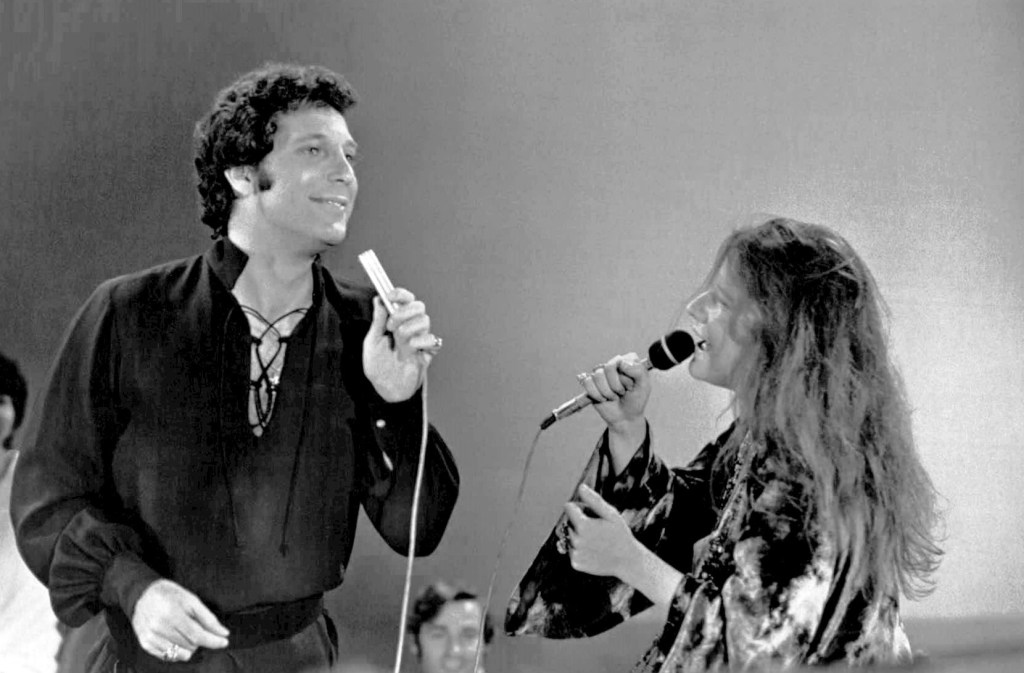
I’d never claim that I knew Tom Jones, but occasionally I’ll tell someone about the conversation I had with the Welsh singer when he was at the height of his fame. I assume they’ll be impressed. Older people do show interest. But not younger people. Youngsters don’t ask what Tom Jones and I talked about. They ask “Who’s Tom Jones?” I’ve learned you don’t impress people by talking about a singer who’s been pension-eligible for more than a quarter century. Maybe I should have been talking to those youngsters’ parents or even their grandparents.
There are at least two reasons why we should not worry what others think about our image.
First, their opinion really doesn’t matter. One of the older gentlemen I meet at church always dresses smartly. On a recent hot summer’s day, I teased him that he was probably the only person in church that Sunday who was wearing a tie. His reply was brief but honest: “I don’t care at all what anyone else thinks”. Well said. He was dressing exactly as he wanted. He was entirely respectable, so he had every right to wear a tie and to ignore anyone else’s opinion. Including mine.
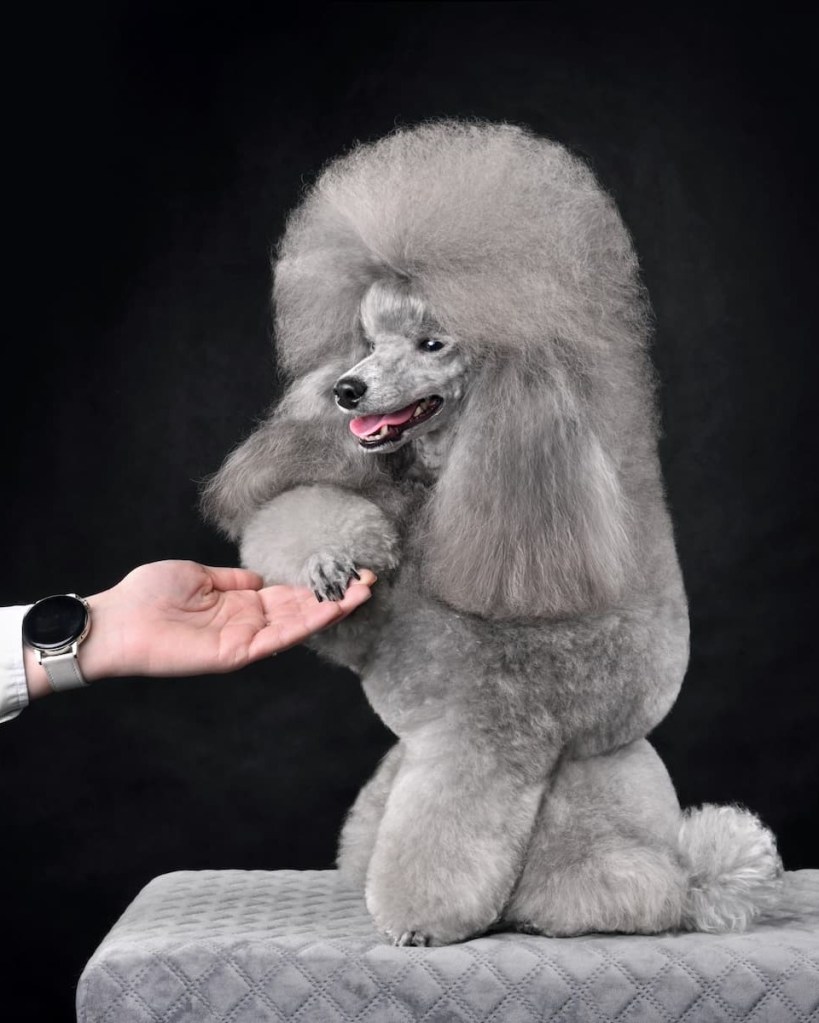
So, if you want to dye your hair bright green, do it. If you want to drive a pink car decorated with flowers, do it. If you’ve moved to London from Glasgow and people can’t understand your Glaswegian accent, that’s their problem. If, like a boss I once had, you want to vacation in grand hotels across Europe where dinner jackets are required in the dining room, you’re entitled to that choice. If you want a dog ready for dog shows, and with a big WOW factor, go for a poodle groomed like a queen or like a pop star. Love your dog, love yourself, and be ready to spend a fortune on poodle grooming.
There is, though, a few exceptions to the ‘their opinion doesn’t matter’ principle. For example, you would usually be wise to meet the dress code of your employer. And there’s no gain by failing to impress a client because of an outlandish appearance. And you should be thoughtful if you’re attending an event such as a wedding or funeral when what you wear could offend the people for whom that day is especially important. Or, in London don’t mingle with Tottenham Hotspur supporters while wearing the red jersey of Arsenal, or in Glasgow don’t wear the green and white of Celtic when you’re among the blue-shirted supporters of Rangers. There are times to be very careful with your image!
Second, you can’t please everyone. Our clothes, our manners, our actions may impress one group of people but simultaneously upset another group. There is no single way of appearing or behaving that everyone loves. In my early years of study at Edinburgh University, I dressed casually, sometimes untidily, because that’s what almost all my fellow students did. But one day I had a funeral to attend around midday, but in the morning I had an appointment with my history lecturer. Dr Malkiewicz was Polish. Whether it was his background or personal preference, he was formal to an extreme in almost every way. Every day he lectured and pored over books in his office wearing his dark suit, collared shirt and tie of muted colours. His words were always precise, never saying more than the minimum necessary. I was slightly terrified about a one-to-one meeting with Dr Malkiewicz, and very self-conscious that, because of the funeral I would soon attend, I was dressed in my one and only suit, white shirt, wearing a black tie. I was so nervous that my first words were ones of apology for dressing so formally. Dr Malkiewicz looked at me over his glasses, and quietly said “This is the first time a student of this university has apologised to me for dressing properly”. That day I didn’t fit in at all with other students, but I did with Dr Malkiewicz. You really can’t please everyone.
Fourth, to some extent those who work in certain professions need to present the right image. But it doesn’t mean they’re better at their job.
In 1993 US President Bill Clinton considered his appearance enough of a priority to have Beverley Hills stylist Cristophe trim his hair while Air Force One was parked at Los Angeles International Airport. That may rank as one of history’s most controversial haircuts because news outlets reported that two runways were shut down because of the extended stay of the President’s plane. In fact only one commercial plane was affected, and only by two minutes.
Politicians are almost all very fussy about how they look. Most are never seen dressed in anything but a formal suit. Presumably to wear casual clothes would not indicate discipline, smartness and a business-like attitude. But is that right?
Every few months our organisation’s investment advisors came to our office to report on their work for us. Invariably they were dressed in pin-stripe suits from London’s Savile Row, matched with silk ties costing hundreds of pounds and highly polished and very expensive shoes made from premium leather. Their super-smart formal attire was their uniform. But what I found strange and amusing was not the dress of our visitors, but, for those meetings with the advisors, my own financial staff also dressed in formal suits, ties, and their best shoes. I never saw them wear those clothes any other day – but the financial gurus were coming, so they felt obliged to present an equivalent image.
Then we switched investment advisors. And the time came for the new firm to present their report at our offices. As usual, our team turned up impeccably dressed. The lead partner for our new advisors was dressed in… wait for it …. a casual sports jacket, no tie, and his everyday shoes. And halfway through the meeting he ate a banana! Our people were taken aback. But Mr Casual turned out to be a much better financial manager than the suited and booted people we’d employed before. When we saw strong returns on our investments, no-one cared at all about how he dressed.
So, I accept that financiers, bankers, accountants, lawyers feel they must present (what they would call) a professional image, but at the end of the day performance matters more than appearance.
Fifth, when it comes to products, advertisers love to present an image of desirability
Some years ago Audi created an ad – rated as one of the best ever – which never showed any of their cars. It asked what we want in a car, then hung keys for rival luxury cars on hooks alongside words like ‘design’, ‘comfort’, ‘safety’ and ‘sportness’, then quietly the words appear ‘In one car only?’ followed by the name Audi and its emblematic four rings. No words spoken, no clever camera work, just an image created that Audi is better than other luxury cars. (https://www.youtube.com/watch?v=qgj2ZAYDv5k)
Image matters greatly to many brands or services. Looking good attracts customers and positions them as ‘premium’ in the market. Colleges and universities are fussy about their image, and so are hotels.
But image-selling is now prevalent across many categories. Recent TV ads for ‘white goods’ like fridges and dishwashers say next to nothing about how well they work, but only how well they blend in with other kitchen units. One description of how Harley-Davidson market their motorbikes states that they sell a lifestyle and emotional connection rather than just a machine. In a similar way, Apple does not sell the technical specification of its iPhone, but the premium lifestyle and emotional experience an iPhone gives you. Luxury or super-powerful cars – a Rolls-Royce or Ferrari – don’t sell for their affordability or practicability but for the prestige or thrill that comes with owning such a luxury product. This 2026 campaign film by Ferrari is a prime example of how to present a premium brand image: https://www.youtube.com/watch?v=ZCtpe9rOcr4
Finally, then, I accept I will never look cool in a CK t- shirt, or own a Ferrari, or get a plane to wait while I get a haircut. Happily, none of those matter to me. I’m comfortable in my own skin. I’ll always try not to upset others, but, on the whole, I’ll live my life as I want and should, and care very little whether people do or do not like that.
[1] The Congo Rainforest covers roughly 3.3 to 3.7 million square kilometres (300 to 370 million hectares). That’s the size of India or ten times the size of Germany.
[2] At the time of that visit to the DR Congo, life expectancy from birth was only a little over 50 years.
[3] You can read Lottie Jackson’s article here: https://justfair.org.uk/home/blog/guest-blog/this-is-a-human-rights-issue-the-hidden-truth-about-clothing-poverty/

