Doubly wise men

If I was writing a novel about the birth of God’s Son, I would not have him born in a stable, laid in an animals’ food trough, make his first visitors people with low status like shepherds, and later have him worshipped by people with uncertain beliefs who arrived from a foreign land. But that is the Christmas story as given in the Bible.

Today we call the people from another land ‘wise men’ or ‘kings’. They were wise men but almost certainly not kings. The New Testament story of the wise men comes from the gospel writer Matthew (chapter 2). He wrote in Greek, and he describe the visitors as magi, the plural form of the word magos. A lexicon (dictionary) will give the meaning of magos as sage, magician or sorcerer. Those definitions are not wrong, but that doesn’t mean each is appropriate for the men who visited Jesus. I will explain.

The Magi were a Median tribe, part of the Persian empire. They were people with great learning and understanding, so much so that as priests they became advisors to Persian kings. Hence it’s right to describe them as ‘wise men’. Part of their wisdom came from study of old disciplines such as philosophy, medicine and the natural world. The natural world included the stars which at least some magi observed very carefully.

These were the magi who travelled many miles to worship Jesus. They likely held ideas many of us would regard as strange, but they were good men, holy men. Decades or centuries later, the word magos also became used for less worthy people: sorcerers, fortune-tellers, magicians. (In fact, our word ‘magic’ comes from magos.) But there is no sign at all that the magi Matthew writes about were sorcerers or magicians. They were men who studied the stars, and one night they saw a star rise in the sky. We don’t know how, but they understood that star meant God had sent a new-born baby to be King of the Jews.

Where did the Magi[1] come from?

We know only that they came from the east. There has been no shortage of speculation about where exactly they travelled from. If you look on a modern map, then east of Israel are countries such as Iraq, Iran, Afghanistan, and eventually China. But ancient Persia – modern day Iran – is a very likely host country for magi such as the visitors to Jesus. In the centuries before Christ, Persia was vast in size. Its borders stretched from countries like those we now call Bulgaria, Romania, and Ukraine right across to parts of India, and also south into Egypt. By the time of Christ it was smaller, but still large. And a natural home for magi.

How far did they travel to find Jesus?

Since no-one knows precisely where these Magi made their home, the guesses of how far they journeyed to Jerusalem and then Bethlehem range from 500 miles up to 1200 miles. Starting from homes anywhere between those numbers meant they had a very long journey. And, in those days, there were no cars, no trains, no planes, and no motorway standard roads.

How long did the journey take to get to Jesus and then back home?

We are not told, but we can assume that the wise men rode on camels. It’s highly likely, though, that they travelled as part of a larger party, and their attendants will have walked. Given the terrain, sometimes difficult weather, and the need of rest stops for both people and camels, it’s unlikely they could average more than 3 mph. Even if they travelled for 10 hours per day, they’d cover only 30 miles from dawn to dusk. Assume 30 miles a day and a trek of 1000 miles, and their pilgrimage will have taken approximately 330 days. That’s more than ten months. And they had it all to do again in reverse to get home.

So, the time involved to go and return may have been 20 months or more. The expenses (camels, servants, supplies) would be high. The risk – for there were many bandits dedicated to robbing rich travellers – was immense.

Put all this together, and it’s clear that these Magi made a major commitment of their lives for this journey. They saw a sign in the night sky, and they went. All so they could kneel and give gifts to a very special child.

How many Magi were there?

Down the centuries, people have imagined there were three wise men. Paintings have always portrayed three, and later legend gave them names: Gaspar (or Caspar), Melchior, and Balthasar. Some have thought they represented the three continents recognised in ancient times, Europe, Asia, and Africa.

There may have been three wise men, but the gospel writer Matthew either did not know or was not interested in details of that kind. So their names, their origins, and even their number are all much later speculation. So, why has it been traditional to believe there were three wise men? Simply because three gifts are mentioned: gold, frankincense, and myrrh. But three gifts doesn’t prove there were three givers. Perhaps six, or eight, or ten magi all contributed to these gifts. We simply don’t know how many wise men there were.

Did they kneel before the manger to worship Jesus?

Works of art usually show these wise and wealthy men bowing humbly before Jesus in the manger. It’s a moving scene.

But they didn’t. and they didn’t because Jesus was no longer in a manger in a stable. We know that for two reasons. One is that Matthew (2: 11) wrote that the wise men visited Jesus in a house. The word Matthew used was the Greek oikos and oikos always means a dwelling, a place of human habitation. It would never be used for a cave or stable.

The second reason we know the wise men never went to the stable is that by the time the wise men could have arrived to worship Jesus he would be several months old. Joseph and Mary with Jesus will have continued to live in Bethlehem, but, understandably, not in a stable. Two factors indicate the time lapse before the visit of these Magi.

First, the time it took for them to travel. the wise men told Herod they had seen the star rise “of the one who has been born king of the Jews”. (2: 1-2) The child from God had been born, and they must pay him homage. So, after Jesus’ birth, they prepared for their journey, and then rode or walked many months to reach Jerusalem and then Bethlehem.

Second, the age of the children Herod ordered to be killed. What the wise men told King Herod had troubled him deeply. He hated the idea that another king had been born. So, when the Magi never returned to his palace to report Jesus’ exact whereabouts, Herod ordered his troops to slaughter all the boys born in or near Bethlehem “who were two years old and under, in accordance with the time he had learned from the Magi”. (2: 16) Matthew is quite specific that Herod targeted the boys born in Bethlehem within the time frame the wise men had given. That included those born up to two years previously.

Given these factors, the evidence is that considerable time elapsed before the wise men arrived. They were not visiting a newborn baby.

Is it not odd that holy men with generally contrary beliefs came to worship Jesus?

Yes, it does seem strange. In fact, it is also surprising that shepherds were the first to visit after Jesus’ birth. In those times, shepherds were not held in high regard. Spending day and night guarding their flocks meant they often failed to observe the ceremonial laws. But, in their favour, they were Jews, members of God’s ancient people.

The wise men were not Jews. We know they had high rank and considerable wealth because their gifts were expensive. But they observed no Jewish laws and had no part in Jewish heritage. They came, honoured Jesus, and then they disappear completely from the story. There is no suggestion they became Jesus’ disciples. Our only information is that these were magi from another land, from a wholly different belief system, who saw a sign in the heavenlies which they rightly interpreted as indicating the birth of the child who would become king of the Jews, and they came to worship him. It is remarkable that God revealed such news to them, and also remarkable that they made a long, arduous and risky journey to find Jesus and when “they saw the child with his mother Mary… they bowed down and worshipped him.” (2: 11)

Now, none of that could have happened unless these Magi already believed in God. Their ideas will have been mixed with other beliefs that didn’t belong with either Judaism or (what became) Christianity, but they had sufficient faith in God to understand he was speaking to them by a special star in the sky. When that happened, they didn’t just stand back in amazement; they knew God wanted them to find this special child, and when they did they worshipped him. These were men who sought God, and God brought them nearer to himself by leading them to his Son so they could worship him. The lessons I take from that is that God can and will do whatever he wants with whomever he wants, and does remarkable things to draw people to himself.

But didn’t the wise men put Jesus at risk because of their visit?

Yes, looked at from a human perspective, they did put Jesus at risk. It’s a curious case of doing what was right by going to find Jesus, but in doing so they triggered Herod’s jealousy and murderous actions.

Let us be very clear: at no point did these Magi do wrong. They were right to make their long journey to worship Jesus, and, with the little they knew, it was understandable they went first to the royal palace to inquire about the birth of a new king of the Jews. They could not have known how alarming that would be to King Herod. And it was Herod who decided he must eliminate this risk to his throne. When he couldn’t find Jesus, he ordered (what we now call) the ‘slaughter of the innocents’ around Bethlehem.

Someone making a harsh judgment could say those two things – their visit and contact with Herod – cost the lives of many children. That person might say it would have been better if the wise men had never come.

However, the obvious truth is that the wise men did not motivate Herod to murder Jesus, nor his eventual decision to kill the young male children of Bethlehem. Herod, and Herod alone, is responsible for these dreadful deeds.

The horrific truth about King Herod is that these deaths in Bethlehem were not the greatest evil of his reign. All his life he’d done terrible things. Early in his rule he’d killed off half the Jewish Sanhedrin (the ruling court for the Jews). Later he’d had 300 of his court officers put to death. He also murdered his mother-in-law, his wife, and three of his sons. Finally, when he lay dying, he gave orders that one member of each family in Israel was to be killed. Why? To guarantee the nation would be mourning at the time he died. (Thankfully, with Herod dead, that last order was never carried out.) Herod has been described as “a man of ruthless cruelty…”. He certainly was.

This world has always had Herods, people with great power but few morals, people who will do anything to promote their interests, people who think nothing of sacrificing others to benefit themselves. That was true in the ancient world, true in the Middle Ages, true in modern times. Terrible people have always done terrible things to innocents who have done nothing to deserve it. In King Herod’s case his fear and jealousy were aroused by the visit of the Magi, but the wicked crimes that followed were Herod’s doing and Herod’s alone.

Did the wise men put their lives at risk by failing to return to Herod?

Yes, they certainly did. The Magi and their whole party might have been put to death by Herod’s soldiers.

After finding Jesus, the Magi were supposed to return to King Herod and reveal Jesus’ precise location in Bethlehem. He was very clear: “Report to me!” There was no option to refuse. This was a tyrant’s command, and failure to obey would cost them their lives.

The Magi had little time to consider their options. Bethlehem is only six miles from Jerusalem. That was only half a day’s walk, and Herod knew they could go one day and be back in his palace the next. Even if they’d stayed in Bethlehem for a couple of days, it needn’t be long before they stood in front of Herod again, this time with details of where the special baby could be found.

Herod, of course, had lied about why he wanted that information. He’d said he wanted to go and worship the child too. (2: 8) But the Magi got another divine message, this time a warning in a dream not to return to the palace, so they avoided Jerusalem and Herod, and took a back road to get out of the country.

That took great courage. First, they knew that Herod was a viciously cruel ruler who never tolerated disobedience. Second, he would certainly have them put to death if he caught them. Third, the wise men and their party could not journey inconspicuously. Herod’s soldiers would be hunting for them, and the local people might get a reward for revealing their whereabouts. There was a strong likelihood they’d be seen, reported, captured, and executed. Despite the risk, they took another route and headed home. It was a choice others would not have made.

So the wise men return to the east. But Jesus, of course, was still Herod’s target, and next time we’ll see how Joseph, Mary and Jesus became refugees who fled for their lives.

Last word on the wise men I think of these Magi as doubly wise men. First, they recognised God’s sign in the stars, and made an arduous and hazardous journey to worship a young child. They had the wisdom to obey a heavenly authority. Second, they then had the wisdom to disobey an earthly authority, accepting that decision could cost them their lives. But God’s priority was always their priority. You can never be wiser than that.


[1] I am giving an initial capital to Magi when referring directly to ‘the Magi’ of Matthew’s gospel, but using the lower case magi when referring to these priestly people more generally.
Hope

It’s Beirut, late 1980s, and Brian Keenan is blind-folded and imprisoned in a dark and dirty basement. He has no idea where he is, whether he’ll live another day, and if he’ll ever return to his Northern Island home and family.

Keenan went to Beirut to lecture in English at the American University. With civil war raging, friends urged him not to take the job. With typical Irish humour, he told them he wasn’t at all worried because, after all, he’d grown up in Belfast during the ‘Troubles’.

Just before 8.00 am, Keenan set out for the university and was kidnapped off the street by the Islamic Dawn. Little was known about his captors, other than that they were part of the militant Hezbollah movement. Now Keenan is a hostage.

Since his capture he’s been moved from location to location. He lies or sits blindfolded on stinking mattresses, sweating in Mediterranean summer heat and shivering in winter cold. His food is meagre, water never enough. He stinks because his accommodation is filthy. Again and again he’s beaten and tortured. His only comfort is being imprisoned with John McCarthy, a fellow hostage. Though very different in background, they bond together. Neither knows if they will ever be released, and yet, at times, they imagine that one day soon their captivity will end. Keenan later called such a time a ‘high ground of hope’.

Then one of their guards, Abed, comes in. He is unusually pleasant, and announces that today the men are both getting new clothes. John is exhilarated. This is surely the best of signs. Keenan, though, is flooded with depression and anger. The new clothes do not mean early release but exactly the opposite. He wrote later: ‘They plainly implied to me that we were staying for a much longer time than our hope had led us to believe’.[1]

I read those words nearly 20 years ago, and they’ve never left me. Keenan had been on his high ground of hope but new clothes told him no release was coming. With hope gone he collapsed into despair.

For those who want to know what eventually happened with Keenan, I’ve added a note at the foot of this blog.

Keenan needed hope. We all do. But why do we need hope, and how do we find it?

Hope generates a positive attitude    In my late teens I played rugby for a team called Cambuslang Athletic. But I should admit my rugby was played in their third team, made up mostly of people too unfit or unskilled for the better teams. Few of us came from Cambuslang (near Glasgow, Scotland), and absolutely none of us were athletic. We’d trot onto the rugby pitch, take one look at our opponents who were always giants capable of running right over us, and we knew we’d lose. The whistle would sound, the opposition would get the ball, and two minutes later they’d have a touch down and conversion. On a good day their second score wouldn’t happen for at least five minutes. And so the match would continue. We might be 30 points down before half-time, and wondering why we’d bothered to turn up. In the second half no-one on our side was running too much, or tackling too hard. Why exhaust yourself, and why risk injury when you know you won’t win? Every match was like that. Except one. On that day the near miracle happened and we got to half-time and the scores were tied. We weren’t winning but we weren’t losing. During the short break, we stood in a circle, sucking pieces of orange, and we all felt something previously unknown rise within us: hope. We could win this match. And driven by hope, we went into the second half with energy, optimism, determination, and we ran and tackled and pushed and jumped and kicked like we’d never done before. And that day – that one day – we won.

Hope carries us forward. Hope fuels positivity and banishes negativity. Hope is the parent of belief.

Hope keeps us looking forward    I walked to school every day, and often my mum would stand by our front gate watching as I walked off down the street toward school. She’d wave, and I’d wave back. And she’d wave again, and I’d wave back. I learned to walk backwards so I could wave more easily. Walking backwards was a bad idea. The back of my head met a very solid concrete lamppost. As my head cannoned off the lamppost, stars floated in front of my eyes, and I staggered around. After a few minutes I recovered and learned a lesson: look forward in life.  

Hope guarantees we do that. By its very nature, hope is forward-looking. It sees what doesn’t yet exist, what’s possible but not yet actual, what’s not in our grasp but could be, and pushes us forward toward goals we’d never reach otherwise.

Too many think their best days are past days. With rose-tinted glasses, they sentimentalise and idealise a previous place, or job, or feeling, or experience, or relationship, and cannot imagine anything ever being so good again. And – if they keep looking back – they’ll be right, because looking back fixes you in the past. Hope, however, turns us round, faces us to an even better future, and delivers a kick where it’s needed most to get us going.

Hope builds endurance    During my darkest days of depression I could see no good future. That’s a bad and dangerous place to be, especially when you believe everyone would be better off without you. Meaning well, some told me, ‘Don’t worry, there’s always light at the end of the tunnel’. But there wasn’t. Somehow I was inside a circular tunnel, going round and round with no escape, no end, and therefore no light. The people closest to me – my wife Alison and one or two others – were more careful about what they said. Mostly it was just one message: ‘this depression will not be for ever; it will come to an end; you will be able to move beyond it’. I might have written off those words too. I had no concept of how my depression would end. But I trusted these people. They loved me and would tell me the truth, so I couldn’t dismiss their message. Their words – that this depression would end – injected a glimmer of hope into my mind. Hope may just have flickered, but even the smallest hope has strength and it pulled me forward, week after week, and month after month. Life was still very hard, but I wasn’t stuck in my darkness. Hope dragged me through each tough day and night. Then, after two and a half years and with no warning, one day I stepped out of my circular tunnel and there was light and goodness and love and a life worth living for.

I was given the gift of hope. It was fragile but resilient. And it changed my life.

Hope needs wisdom as its companion    There are at least two reasons why hope must be guided by wisdom.

Hope can be directed to unwise or wrong ambitions. I imagine someone saying, ‘I hope to be Prime Minister (or President) soon’. If that ‘someone’ is a UK Member of Parliament (or a US Senator), that hope could be reasonable. But if those words are spoken by a janitor in the House of Commons (or US Congress building), their hope is fairly unrealistic, at least if the word ‘soon’ is in the sentence.

Hope needs wisdom to point it in sensible and good directions. Someone might hope to become a multi-millionaire by buying ten lottery tickets next week. Or, another person might watch a ‘How to paint’ YouTube video and hope to be recognised as a world famous artist by the end of the year. These ‘hopes’ are misdirected; they’re neither sensible nor good. We must be wise as well as hopeful.

We need to be careful when hoping for the most important things in our lives. I supported Mary while her little girl Sandra lay in intensive care because of a major brain injury. As Sandra’s life ebbed away Mary prayed and hoped against hope for a miracle. Not for one minute would she give up believing that Sandra would get well. But Sandra died, and Mary was devastated, wholly unprepared for her daughter’s death, experiencing grief that made her irrational and a danger to herself. Kate developed cancer. She and her husband Henry were in their thirties with three children. Though Kate’s cancer had spread through her body, it seemed wrong that someone young, beautiful and so loved and needed could die. They prayed constantly for healing. People told them God had promised Kate would get well, but they must believe for the healing and never doubt it. Special services were held, all-night prayer sessions took place. Kate got weaker but she and Henry still hoped, still believed for the miracle. I sat beside Henry as Kate’s brave battle ended. Later, Henry told me that it was only three weeks before Kate died that they’d talked about what death meant for her, how he would manage with the children, and she’d given him ‘permission’ to marry again. His one regret? That they hadn’t talked through these things months before. They hadn’t because they’d clung so strongly to their hope of healing that they didn’t dare admit it might not happen.

It seems strange to write these paragraphs, as if I’m undoing the positives about hope. I hope I haven’t done that. But I’ve included these stories because hope must be wisely managed. It’s exactly the same with love, ambition, care, loyalty (and more) – all good things, yet all needing wise stewardship.

How do we find hope?    Here I have to declare that I don’t know for sure where hope comes from. But I suspect hope is a gift of God, somehow wired into us.

I need to immediately add that hope can easily and quickly be suppressed. I’ve told the story before[2] of an evening walk with an Indian friend through the streets of Calcutta (now Kolkata). I saw the flimsy shelters of families who lived on the sidewalks, and watched as parents wrapped their little children in sack-like material to insulate them from the cold before laying them down to sleep. I was shocked, and asked my friend how long before these families would have a home of their own. My friend was gracious, and gently explained that in the sense I meant it these families would never have a home. He said: ‘The parents – like their parents – were born here on the sidewalk, grew up here, as will their children. They will never have any other home.’ That night there was a thunderstorm, and those families had no way to escape being drenched.

Why describe this? Well, the little children in those families might have hopes – a decent meal, one day a job – but early on in life they’d be told any really big hopes were pointless. Their circumstances – as with all those living with cruelty, hunger, imprisonment – repress the gift of hope in their lives. I wish it was not so, and I don’t believe the world must be that way, but for many that’s exactly how it is.

Hope can also be squashed in those with advantaged lives. A constant attitude of negativity does that. I’ve met people who, instead of believing every cloud must have a silver lining, believe every silver lining must have a cloud. A mind like that is an infertile field for hope. It cannot thrive there.

Others damage hope by arrogant over-confidence, perhaps borrowing thousands to start a business yet failing because they never researched whether that business was needed. I’ve seen that pattern repeat over and over and, eventually, these rash entrepreneurs become discouraged and lose hope. But hope goes only because they create their own failures.

And, for some, being hopeful is too risky. They can’t form a deep relationship in case it falls apart. They can’t accept promotion in case they fail with higher responsibilities. They can’t enter a competition in case they lose. Such fearful people damage their ability to hope.

But, with all those cautions, I still believe hope is a gift planted in all of us. When encouraged it grows and leads to a gloriously positive attitude to life. And hope can be passed on, just as Alison and very close friends did for me during my darkest days. Hope is infectious.

And hope lasts    One of the marvellous chapters in the New Testament is 1 Corinthians 13, sometimes described as a passage in praise of love. As well as describing wonderful things about love, it mentions things that will one day pass away, including knowledge. But, three things will always remain ‘faith, hope and love’ (v.13). The Bible has plenty to say about faith and love, but hope is right up there between those two. Hope is important. Hope lasts. Hope is a forever thing.

Be hopeful today.

—————————-

Note: how Brian Keenan’s captivity ended

After four a half years of captivity, on August 24, 1990, Keenan was bundled into a car, driven to Damascus, and passed to Syrian and then Irish authorities. He was free. He was met by his two sisters, and together they flew the next day to Northern Ireland. He was severely malnourished and physically weak, having lost 4 stone (56 pounds, 25.4 kg) during his imprisonment. For a long time after his return Keenan sought solitude, but in 1993 he married his wife, Audrey, and they have two sons.

John McCarthy remained a prisoner until 8 August 1991. The two men remain friends, though apparently rarely talk about their captivity.

In a 2016 interview, Keenan said: “I’ve come to an understanding. I have been given much in life. I look at what I have been given and it’s greater than what’s been taken from me.”  (Irish Post, April 12, 2016)


[1] Quoted from: Keenan, Brian (1993). An Evil Cradling. London: Vintage. p. 109. The book is a detailed account of Keenan’s captivity in Beirut. Inevitably it’s a gritty read, but brilliantly written and deeply moving.

[2] In the blog ‘Not the world as it was meant to be’ of August 29, 2021. See https://occasionallywise.com/2021/08/29/not-the-world-as-it-was-meant-to-be/

Even more wisdom

Dictionaries struggle to define the word ‘love’. Because it’s not a ‘thing’ it’s hard to describe, so dictionaries use phrases such as ‘strongly liking another person’ and also talk about romance. Not exactly comprehensive. But, since you can’t put love under a microscope you can’t analyse its constituent elements. You can only talk about how love is felt or shown, especially when that love is between people. (Loving your job, your house, your garden, even your dog, isn’t quite the same.)

Describing wisdom is as problematic as describing love. You can’t sum up wisdom with a word or phrase; instead you give examples of wise decisions or actions. That’s what I’ve done in the last two blogs, and this one isn’t different.

I’ve listed six categories in which wisdom matters. I could have listed 16, and by next week even more. But one I’ve listed here is about knowing when to stop, and I will stop writing about wisdom (at least for a long time) after this blog.

Here goes with (hopefully) even more wisdom.

Value

Oscar Wilde wrote that a cynic was ‘a man who knows the price of everything and the value of nothing.[1]

It’s a great line, and likely true concerning many people. The second half is disturbing: that, someone could know many things but know nothing about their value. Not know where worth really lies. Not know what’s truly important.

Wise people don’t make that mistake. They understand what matters, and they prioritise and pursue those things rather than the trivial and ephemeral, things that are unimportant and don’t last.

I’ve been privileged to pour myself into work that has deeply affected people’s lives, both in the UK and many other countries. I have seen some people change; others, scattered around the world, I simply knew about through friends and colleagues.

Not everyone can have jobs aimed directly at transforming and improving lives. Sadly, some have hated their jobs. Their work, it seemed to them, contributed nothing other to boost the profits of a large multinational corporation. Why did they not find other employment? They didn’t leave because they were well paid. One was so well paid he had three cars: a Jaguar, a Porsche, and a Maserati. And he bought a ranch as well. I’m not suggesting cars or a ranch are ‘sinful’ – just that directing your life towards accumulating wealth or owning ‘things’ produces no lasting worth.

Wise people know where value really lies, and set their goals accordingly.

Health

My mother started smoking in her mid teens, a long time before the general population had any idea that cigarettes were harmful. My father probably started around then too, but never smoked heavily except perhaps during World War II when he was in the army. As my brother and I were growing up, mum and dad both discouraged us from smoking because ‘it causes shortness of breath’. But – unknown to them – smoking was much more serious than that. It was killing them. My mother’s heart was badly affected, and she died aged 55. My dad immediately stopped smoking but that couldn’t eradicate the damage already done. He had a massive heart attack when 64, and survived it, probably because he was already in hospital and got immediate attention. He reached 79, and then died of a second heart attack. Our most favourite aunt – my mum’s sister – smoked all her adult life, and she died aged 74.

You’ll gather I have strong feelings about the harm cigarettes do to the human body. Thankfully I took my parents’ advice and never smoked, not even once.

This paragraph isn’t meant to be a rant about cigarettes, but a statement that wise people take good care of their health. At a minimum that’ll involve a good diet and exercise. I married well, and Alison ensures we eat only what’s good for us. Diet: tick. And we walk our dogs up and down hills every day, and Alison is a committed gardener while I play golf two or three times a week. Exercise: tick.

I spoke at a large conference in the north of Scotland, a talk during which I said we should care for our health to avoid hastening death. One man came to me straight afterwards, anxious to persuade me that we can’t hasten our deaths. We can die only when God has ordained it. My answer was along the lines that God has ordained that we care for the bodies he’s gifted us so we can fulfil all the potential he’s invested in us. That man and I didn’t argue, but also didn’t agree. Oddly, we stayed in touch, became friends and that led to the publishing of four of my books.

Whether we believe our bodies are gifts of God, wisdom dictates we care well for them. Damage your body at your peril. You can’t trade it in for a replacement.

Family

I have attended many retirement events, at which we celebrated people’s long service and achievements. At the end the retirees would speak. Almost always they’d say that if they had it all to do over again, they’d give less time to their work and more to their family. It seems their children had grown up strangers to them. I vowed to never have to give that speech. Certainly Alison and the family made sacrifices because of my work, but we all survived, and now our grown-up children are our best friends. We get on great. Whatever wisdom helped that happen, I’m grateful for it.

Destiny

Image in public domain

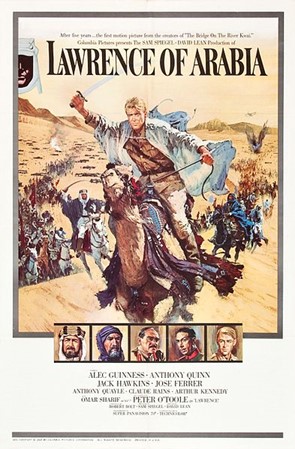
In the 1962 film Lawrence of Arabia, based on the life of T.E. Lawrence, there’s a short scene that influenced me significantly. Lawrence is doubting he can continue leading Arab tribes in battles against the Turks during World War I. Exhausted and emotionally troubled, Lawrence considers giving up the fight. Then the top general challenges him with words like these: ‘Many go through life with no awareness of a destiny. But it is a terrible thing to have a destiny, and not to fulfil it.’ Those words stir Lawrence, lift him from his depression and weariness, and he presses on to win significant battles.

The words in the film were probably the work of a script-writer and not original. Yet they captured Lawrence’s situation, and impacted me when I was worn down. I knew I had a calling, a destiny, and it hit me freshly that it would be terrible not to fulfil it.

My guess is that most people don’t think of having a ‘destiny’ for their lives. The word sounds grandiose. But many do have some sense of purpose or opportunity. There is something they could do and should do. It would be terrible to reach old age and suddenly realise they’ve left it too late to do what they’ve always believed they were in this world to do. A wise person thinks early on about their purpose and potential, and moves steadily towards that goal.

Starting and stopping

I’ve always been tempted to take on more things than I can handle. Giving in to that temptation inevitably leads to stress and incompetence – stress, because we’re overworked; incompetence, because there’s only so many things we can do well.

But most of us are under constant pressure: to join a committee, take on a task, support a good cause. I’ve been asked to lend a hand – it sounded so innocuous – ‘I just need a little help with a project…’ Before long I was doing the project and he’d gone fishing.

Perhaps the only way to have a quiet life is to be hopelessly incompetent, because then no-one asks you to do anything.

Incompetence, though, is a bad solution. Rather, the wise person considers whether a new thing is a right thing.

To be a right thing, three conditions have to be met, best done by asking ourselves questions:

  1.  Does this thing fit with the particular gifts or abilities I have? Most of us could do all sorts of things, but there are some things we’re particularly good at. Those things – which especially fit our skill-set – are likely to be the tasks we should take on.
  2. Should someone else be doing the new task? Many things can be done by many people, so this task doesn’t specifically require me. Just because I could do it doesn’t mean I should do it. Beware those who say, ‘You’re the only one I could ask’ because the real truth may be that ‘You’re the only one I have asked’. Some people don’t look far afield when enrolling help. Don’t be a soft touch.
  3. Can you stop doing other things in order to do the new thing? There’s a saying, ‘If you want something done, ask a busy person’ – because they’re the kind of person who’ll say ‘yes’ when asked to help. But that’s exploitation. They hate to say ‘no’, so soon become overloaded. Unless, that is, they let other things go. I wrote an earlier blog under the heading Necessary Endings (available in Archives, April 11, 2021). I’d been helped by a book with that title by Henry Cloud, a clinical psychologist. He sums up his message early on: ‘…the tomorrow that you desire and envision may never come to pass if you do not end some things you are doing today.’ Wise people limit their work so they can work well. And survive their workload.

Appreciation

One of our dog behaviour books tells us that far beyond any other kind of treat, the greatest motivator for a dog is praise. Lots of enthusiastic ‘Good boy’ ‘Good girl’ ‘Well done’ statements with gentle stroking is key to good dog behaviour. Humans need appreciation too.

I can think of a boss – not one I ever had, thankfully – who was never grateful for what any of his staff did. No recognition of excellence; no recognition of working all hours to get a project finished. Their work was taken for granted; no need for thanks. But if a project went wrong or was late, he flew into a temper and raged at his staff even if the problem had nothing to do with them. You can guess what that boss’s bullying and ungrateful behaviour did to his staff: how little they enjoyed their work; how much they dreaded what might lie ahead as they walked through the office door each morning; how demotivated they were about continuing in that employment.

A wise person is an appreciative person, someone who says ‘you did a great job’. If we can’t appreciate people we’re in the wrong job. Recognising worth and sharing praise is rarely dwelt on in management books, but, done sincerely, appreciation bonds a team and builds achievement.

The Old Testament book of Proverbs says ‘fools despise wisdom’ (ch.1:7). And the New Testament book of James says ‘If any of you is lacking in wisdom, ask God, who gives to all generously and ungrudgingly, and it will be given you’ (ch.1:5). So, fools reject wisdom. But those with a little wisdom can seek more, which God will give. I agree – I’d be a fool not to.


[1] Spoken by Lord Darlington, in Lady Windermere’s Fan, a play first performed in 1892. Wilde wrote the play while living in the English Lake District, hence the source of the name Windermere.

More wisdom

It’s hard to say exactly what wisdom is. Just as it’s hard to say what a chameleon is. ‘Surely it’s not difficult with a chameleon. Look, there’s one – that blue old-world kind of lizard. And another one – oh, oddly that one’s yellow. Maybe, then, yellow ones are not chameleons… Wait a minute, there’s something else that looks like a chameleon but it’s green. Too confusing. I’ll stick with the blue one. But hang on a minute. It’s not blue any more – it’s red.’

Of course, as most know, chameleons have a remarkable ability to change colour – using various combinations of pink, blue, red, orange, green, black, brown, light blue, yellow, turquoise, and purple. Sometimes they change to camouflage themselves, sometimes to regulate their temperature, sometimes to look aggressive to predators, and some may even use colour to signal to other chameleons. All that variety makes it hard to say what colour a chameleon is. But, of course, there’s something at the core – the DNA – that is always chameleon.

I think of wisdom like that. Dictionaries can use words like ‘experience’ or ‘knowledge’ about wisdom, but they just describe how wisdom appears, like blue or red is how a chameleon might appear.

When we’re talking about wisdom we have to be content with that. In the last blog I wrote that wisdom is something which is practised, in other words the way wisdom shows itself. We see attitudes and actions we recognise as wise. So, this time, I have listed five characteristics of wise people.

They use knowledge well

My son sent me a concise example of that: ‘Knowledge is knowing that a tomato is a fruit. Wisdom is knowing not to put it in a fruit salad.’ Hard to argue with that.

Knowledge is usually a wonderful thing to have, but wisdom happens when we do good with what we know.

So, I know my car could reach 100 mph, but I’m foolish if I go that fast. And I know I could simply pick up and cut down a (small) tree with my electric chainsaw, but I’m an idiot if I don’t put on protective gear before using the chainsaw. And, when the children were very young, I knew they’d go anywhere I took them, but I’d have been reckless to run across a busy road hoping they’d follow safely.

Wisdom is not simply about having knowledge, but about doing good with knowledge.

They have strong self-awareness

The Apostle Paul wrote this: ‘Do not think of yourself more highly than you ought, but rather think of yourself with sober judgment…’ (Romans 12:3)

Prince Charles Edward Stuart, 1720 – 1788
Portrait in Public Domain

If only Bonnie Prince Charlie had had such wisdom. In 1745 Charles Edward Stuart[1] crossed from France to Scotland believing he’d get massive support across Britain to restore the Stuart monarchy. He had early success, winning battles and taking troops into England as far south as Derby. But support in England was low, and Charlie withdrew his army back to Scotland. On 16 April, 1746, two armies confronted each other on a rugged moorland at Culloden, near Inverness: the Jacobite army of Bonnie Prince Charlie and the British government army under the leadership of the Duke of Cumberland. The day ended with a rout of the Jacobite army, Charles fleeing the battlefield, eventually escaping to the western highlands and islands, and then by ship back to France.

Why such a defeat? As with all battles, there were many factors and still many opinions. But one is that Charles wanted to prove his skills as commander rather than let his generals get the glory. But he took exhausted men into battle after a failed overnight mission, then waited while many were cut down by enemy artillery fire before hand-to-hand fighting had begun. His chosen battleground was boggy and unsuited to the ‘Highland charge’ which in other places had overwhelmed the enemy. The day was decisively lost, with many dead and wounded. Afterwards Jacobites were hunted throughout Scotland and many put to death. Bonnie Prince Charlie was welcomed back in France, but his later life was not good: he had several affairs, fathered illegitimate children, and became an alcoholic. He died in Rome in 1788, aged 67.

Forty two years earlier, at Culloden, he believed he was a better leader than he really was. It was disastrous for him and his supporters. Wise people exercise sober judgment.

They treat others well

One style of management centres on the willingness of a boss to perch himself on the edge of a colleague’s desk and simply talk. Not a business meeting; not a conversation with an agenda. Just a chance to get to know the staff member, who they are as well as what they do. Perhaps ground-level insights about the business will emerge, but the fundamental purpose is just to be interested. That style of leadership can be overdone, of course. An employee desperately trying to finish a project before a deadline won’t appreciate a chat about last Saturday’s football. But valuing people, knowing them, being interested in their views – that’s wisdom.

It’s even good for people’s health. Apparently research shows there’s great value in direct interaction with colleagues because it releases hormones which improve mood, trust and the ability to learn and remember. The same doesn’t happen via video, messages or emails.[2]

It makes sense that the more you know someone the more able you are to work together. My guess is that there would also be fewer fights between neighbours if they were friends rather than just ‘the people who live next door’.

They have good instincts

In the last blog I mentioned King Solomon’s prayer: ‘…give your servant a discerning heart to govern your people and to distinguish between right and wrong.’ (1 Kings 3:9) God answered that prayer, and from then until now Solomon has been thought of as one of the wisest people who ever lived.

Two parts of that prayer relate to good instincts. One is to have a discerning heart and the other the ability to distinguish between right and wrong.

To discern is to see something clearly, perhaps to have a sure grasp of facts, or perhaps what we call a ‘sixth sense’, an ability to know something without using the five ordinary senses.

To distinguish between right and wrong seems clear. Often it is. But not always. Situations can be ambiguous. Someone’s hurt and I’m driving them to the hospital. If I exceed the speed limit they’ll get help more quickly, but if I exceed the speed limit I might cause an accident, more injuries and possibly deaths. What do I do? Or, another example, a colleague’s language is borderline racist or misogynist. His words aren’t directed at me, but I’m offended and others could be seriously harmed. Do I report him? Do I try and correct him? Either of those will end my relationship with him, but if I do nothing his inappropriate language will continue and do real damage.

In both these examples I could argue the case for either course of action. I hope I’d end up doing whatever my instinct told me was right in the specific circumstances. Like Solomon I’d be praying for discernment and to know what would be right and what would be wrong. Wisdom is having an instinct for hard-to-resolve issues that occur constantly in our lives.

They have more than one speed

No-one should drive like my aunt whose top speed on all roads – all roads – was 25mph. She was dangerous.

But my meaning here isn’t about speed in that sense. Rather, they should be people who look before leaping, and leap after looking. I’ll explain.

There are foolish people who charge through life without taking time to think about what’s ahead. Ivor was like that. He’d have an idea for a new business, borrow money, buy equipment, and rent office space… But what he never did was research the business potential. Were there clients for his services? Were there customers for his products? Again and again he rushed headlong into ‘new opportunities’, but each business failed with serious financial consequences. Ivor had bright ideas, but constantly leapt without looking. (Jesus had words about that kind of folly – the person who began to build but wasn’t able to finish – see Luke 14:28-30.) Wise people look before they leap.

But I also said wise people leap after looking. Of course that statement depends on what you learn from looking. If you stand on the bank of a raging river, look carefully at how far it is to the other side, and realise it’s twice as far as an Olympic long-jumper could cover, then you’re an idiot to attempt even your best leap. You’ll be swept away.

Of course you can’t always leap. But it’s foolish to never leap.

When I left school I went straight into journalism with The Scotsman, which was considered the premier newspaper in Scotland. I was a good reporter, and after two or three years was trusted with being the only journalist on duty on a late shift or on Saturdays. The pay was good. The work was varied and interesting. I saw a great career path ahead. And then I left. I gave it all up. I sensed another direction would be right for my life, so spent many years studying, became a church minister and later headed up major Christian organisations. Like now, it was hard to get into journalism, especially on a national paper, and some of my colleagues in the newspaper office must have thought me mad to leave. Perhaps family and friends did too. But I knew what I was doing. I’d ‘looked’ and now it was time to ‘leap’. It was the right thing – the wise thing – to do.

I’ll finish here for this blog piece. There’s more to say about wisdom, and I’ll try to do that next time.

For now I’ll close with more wise words from the Bible:

Blessed are those who find wisdom,
    those who gain understanding,
 for she is more profitable than silver
    and yields better returns than gold.
 She is more precious than rubies;
    nothing you desire can compare with her. (Proverbs 3:13-15)


[1] Bonnie Prince Charlie’s full name was: Charles Edward Louis John Casimir Sylvester Severino Maria Stuart. Aren’t you glad you’ve never had to write anything like that on an official form?

[2] https://macaulay.cuny.edu/career-blog/the-importance-of-talking-to-your-coworkers/

Wisdom

In ancient times, when kings judged hard cases, two prostitutes stood before their king. I’ll call them Anna and Bella. Anna began their story. They shared a house, both became pregnant and in time gave birth to sons. One night, Bella’s baby died. Quietly Bella got up, took Anna’s baby and placed her dead child in his place. When morning came, Anna awoke and, to great distress, found her baby lifeless. But she looked closely, and realised it was not her baby. It was Bella’s.

Before the king could respond, Bella protested that Anna is lying – her baby is the one who died. The argument continued, but never got beyond ‘Her baby died; ‘No, her baby died’. There was no way to know who was telling the truth? Or was there?

The king had a large sword brought, and ordered that the living child should be cut in two so each woman could have half.

Anna wept. She loved her son and couldn’t let him die, so begged the king to give the child to Bella.

Bella, though, said the king was right that neither should have the child, so ‘Cut him in two!’

Then the king ruled: the child must go to Anna, the mother who so valued the child’s life she’d give him up in order that he would live. ‘Do not kill him; Anna is his mother’ he ordered.

Word of the ruling spread throughout the land. People were in awe of their king ‘because they saw that he had wisdom from God to administer justice’.

The king was Solomon, ruler of Israel for 40 years from 962 BC. The case of the two women and one baby is described in the Old Testament, 1 Kings 3:16-28 (my quotations from New International Version).

Early in his time as king, Solomon sensed God speak to him in a dream asking what he wanted God to give him. His reply had nothing to do with riches or power over his enemies, but: ‘…give your servant a discerning heart to govern your people and to distinguish between right and wrong’ (1 Kings 3:9). And God gave him what he asked for.

Ever since the dispute over the baby, Solomon was seen as having the wisdom of God. Even some 3000 years later, people wish they had ‘the wisdom of Solomon’.

The title of this blog site is ‘Occasionally Wise’. I’d never claim to be all-wise about anything, hence the word ‘occasionally’ in that title. Wisdom is important, very important. Yet I realised I’d never written about it. Until now.

The dictionary I consulted for a definition of ‘wisdom’ used these words: experience, knowledge, and good judgment. I checked several others, and mostly they used the same or similar words.

To me, it seems hard to define wisdom, if we’re thinking of a ‘quality’ someone can possess. Do I know anyone who is so imbued with wisdom they are wise for every circumstance on every occasion? I don’t think I do, and I’m very sure I’m not like that. But if we can’t possess wisdom, I believe we can become people who mostly practise wisdom – train our minds and hearts so that generally we act wisely.

But it’s best to get away from definitions and, in this blog, I’ll write about what wisdom is not.

The writers of dictionary definitions won’t like some of this!

Wisdom is not knowledge    Knowledge is a great tool, but no guarantee of right decisions. Josef Mengele was a doctor and a Nazi SS officer. He had both a medical degree and a doctorate in anthropology. So he was exceedingly knowledgeable – a clever man but also an extremely wicked man. The name he acquired in the Auschwitz concentration camp was Angel of Death. He was happy to assess victims to die in gas chambers, because it gave him opportunity to select those on whom he would perform appalling and deadly medical experiments, especially on identical twins. He knew much, but applied it in ways so unwise he is remembered only for infamy.[1]

Wisdom is not experience    It’s wise to learn from experience. No question about that. But the problem is that many don’t learn from experience. They hold the same beliefs, same assumptions, same values, same goals, and therefore make the same mistakes. That explains the oft-quoted trite saying: ‘If you always do what you’ve always done, you’ll always get what you’ve always got’. The sentence is simplistic, but often simply true.

I’ve counselled people on debt, who swore they’d change, and off they went to spend again because it made them feel better. I’ve counselled people on their marriages, about sharing, listening, nurturing, and each said they’d learned, but back they went to squabbling and hating each other, so much I thought they were happy that way. Except they weren’t. Experience had not brought them wisdom.

Wisdom is not authority    A strong leader – someone who points a clear way forward and motivates others to follow – is assumed to be wise. They know the direction to take. They know how to get there. They know how to take others with them. But authority by itself is not wisdom. Napoleon lacked nothing in the authority department, but in 1812  led almost half a million troops in an invasion of Russia. That campaign has been called one of the most lethal military operations in history. Within six weeks he’d lost half his men because of disease, hunger, and extreme weather. More followed when heavy snows fell. Only 120,000 survived, and Napoleon’s image of invincibility had gone.

Hitler – another heavily authoritarian leader – made a similar mistake. In 1941 he dispatched troops to conquer the Soviet Union. Battles lasted until 1945, by which time almost 40 per cent of all deaths in World War II had occurred on the Eastern Front. The battle for Stalingrad in the winter of 1942 trapped 300,000 German troops who froze and starved, and only 91,000 were left when they surrendered. Eighty per cent of all German military deaths occurred on the Eastern Front. It’s widely reported that Hitler thought himself a military genius and ignored his top generals. He used his authority, but his lack of wisdom cost millions of lives.

Wisdom is not taking the easy way    Perhaps one of the best known parables of Jesus is the story of two men and their house building. Probably they were equally good at designing houses. Both places were impressive. The issue that divided them was where they built. One took on the tough task of finding rock for his house’s foundation. The other took the easy way – there was plenty sand so ‘I’ll just build here,’ he decided. Then came the day of the Great Storm – rain fell for hours; the streams flooded; the wind was gale force. The house on the rock stood firm. The house on the sand collapsed with a great crash. That story of Jesus – recorded in Matthew 7:24-27 – is usually called the parable of the wise and foolish builders.

What was wise was the hard way – perhaps it cost more money, certainly it took more time. But the house lasted. The man who opted for the easy way – cheap and quick – lost everything. The easy way always looks… easy. And therefore attractive, because you can have it quickly and at little cost. But the easy way is nearly always the wrong way, not the way of wisdom.

I’ll stop here. After several long blogs, actually very long blogs, one of modest length may be particularly appreciated. A wise choice for me to make.

Next time I’ll write more positively about what it is to have wisdom. Hopefully I’ll find sufficient wisdom for that.

———————–

I realise there was a longer-than-usual gap before this blog appeared. My apologies for that, but I had another of these study pressure moments when my priorities temporarily had to shift. It was the right thing to do – the wise thing to do – but I’m still sorry for the delay. Thank you for your patience.


[1] When World War II ended, Mengele escaped to South America where he consistently eluded Nazi hunters. He eventually died in 1979 from drowning after suffering a stroke.